


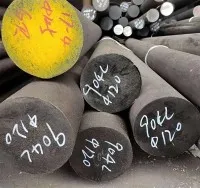


Over the years I have used many types of steel and different shapes of steel to be more specific, depending on the job and what I needed. Whether you are building doors, a skid loader bucket, or even a fire ring bracket each project requires different types of steel.
The 7 most common types of steel are
Rod
flat bar
Metal sheet
iron angle
iron channel
I Beam
Tube - Tube, square and rectangular
From the incredibly versatile flat bar to the I-beam that has helped build the world's tallest buildings, there is a steel frame for almost everything.
Each piece of steel has a unique story and it is essential to understand what makes each style of steel unique and how it is intended to be used.
Once you learn more about these 7 common shapes of steel, you will have a much greater understanding and appreciation of the extent to which the shape of a piece of steel can affect its uses.
We'll help you understand what steel structures are used for, what their typical size is, and tell you some interesting facts about where you can see the structures that make up our world.
flat bar
As the name suggests, flat bar steel is literally an incredibly versatile flat bar of steel. Flat bar steel is very easy to shape and cut to size, so it is widely used in areas such as welding or drilling to assist during construction when a structure needs to be shaped into some form.

Flat bars are often used as a basic support material in construction, where they are excellent for implementing support braces for duct areas.
You can find flat steel bars in any size, from quarter-inch to 12" wide by 20' long segments. Flat steel's size versatility is what allows it to be used widely when performing tasks such as punching or punching. bent.
Flat bars are easily formed into the shapes needed to add support when a construction project needs some additional reinforcement.
One unique place you can see flat bar steel used frequently is in the creation of industrial statues that benefit from easily moldable steel.
Rod
Following the same easy-to-follow naming system as flat bar steel, bar steel is a long, thin bar that is forged from steel.
This steel is unique in that it has been created in a way that is guaranteed to have a tight tolerance diameter and is often quenched before being further shaped.
The shape of the steel rod is usually cylindrical, but there are also variations that use a square design. Regardless of the shape, bar steel is ideal when you need to reinforce or protect something.
You can find steel rods in a wide range of sizes, from a quarter inch to 20" round for more serious needs. If you are looking to keep something away from something else, steel rods are going to be a great way to do the trick. job.
If you ever see bars placed over a window for protection, it is likely a construction that uses steel rod. The added durability found through the creation of steel rod is what makes it so ideal when you are looking to reinforce an area or use it for protective purposes.

Metal sheet
Sheet metal is one of the variants of steel that most people easily associate with. Considering that sheet steel is often found in almost anything that has metal, you don't have to look far to use sheet metal.
You can look to alloy steel for a cheap and effective sheet metal solution that provides a basic level of strength and protection without being too expensive.
You can then get more robust options, such as stainless steels, which when manufactured differently will provide you with a stronger sheet metal.
You can find commonly searching sheet metal sizes like 4'x8' or up to 5'x10' if you need more material.
One of the many benefits of sheet metal is the fact that it can be used to cut very unique and strange shapes that would otherwise take much longer to manufacture using other methods.
Sheet metal is commonly used for punching, bending and forming thanks to its ability to take on almost any shape needed.
Depending on the use given to the sheet, it can be created with different qualities of metal that affect its resistance or flexibility depending on the needs.
Box, square and round tubes
Steel tubes have come a long way since their inception and have evolved into a very capable form of steel for modern manufacturing.
You can find box-shaped, square and round tubes that allow them to be used for various tasks. The ability to create it from different alloys also means it can be used in areas where greater strength or resistance is needed.
In recent years, steel tubing has become widespread in the automotive industry, where it is used to create the structural elements of many vehicles.
Square tubing commonly comes in a 2″X 2″' size, box tubing comes in a 2″ and can be found in sizes such as 1 ½ PST.
So many shapes and sizes of pipe allow it to be used on anything from a car to a scaffold. There are also variations of steel that are welded together or seamlessly for different uses.
iron angle
When you need greater structural integrity for a given object, angle iron will give you just what you're looking for.
This steel formation is typically found in a traditional L shape that is very commonly used to support freestanding buildings and structures.
Angle iron is used to support large bridge elements and to keep shelving upright when loaded with objects. The benefits of structural integrity provided by angle iron make it great for adding to anything you feel could use a little extra support.
You can find these units in equal lengths, such as 1" x1", or unequal lengths, such as 1" x2", depending on the type of support you are looking for.
Steel angles can receive various metal treatments to make them more suitable for certain environments or uses. For example, the integrity of the door can be improved by adding angle iron to the top to prevent bending of the door surface.
Channel C
The C channel, also known as a structural channel, lives up to its name with its C shape and its intention to add structural support where it is needed.
The characteristic shape of this steel makes it suitable for situations where a very specific support is needed.
The steel C-channel bracket is very popular in both automotive and marine construction for its ability to provide the necessary support without any additional weight.
C channel is unique from other common support beam styles in that it only has flanges on one side of the web.
Most channel measurements are going to use the depth of the channel itself and the weight in the foot of the given channel. In many buildings, C channel steel is used for support members and can also be found in many stair decks.
Overall, C channel is not the most popular of beams, but it certainly has its beneficial uses.
I Beam
Last but not least, we have the beloved and reliable I-beam. These are probably one of the most well-known steel structures, as they can be seen as the foundation and core of almost all buildings.
I-beams are considered one of the best ways to reinforce critical areas of a building or structure, as they are capable of displacing a load over their area more effectively than other beam options.
Most construction jobs that need a structural area to have maximum support will use I-beams as support trusses or as the main frame of a building itself.
Due to their use in large-scale products, it is very easy to find I-beams in 20, 40, and 50 foot options. You can also find I-beams with flanges of different widths when they are needed to support extra sensitive loads or are used for foundation support.
Form I is probably so popular because it is able to provide excellent structural support without wasting any unnecessary steel in the process.
This makes the steel lighter than larger beam styles, while still offering great support. The ability to support single loads from various positions makes them the preferred beam for most large-scale construction projects.


