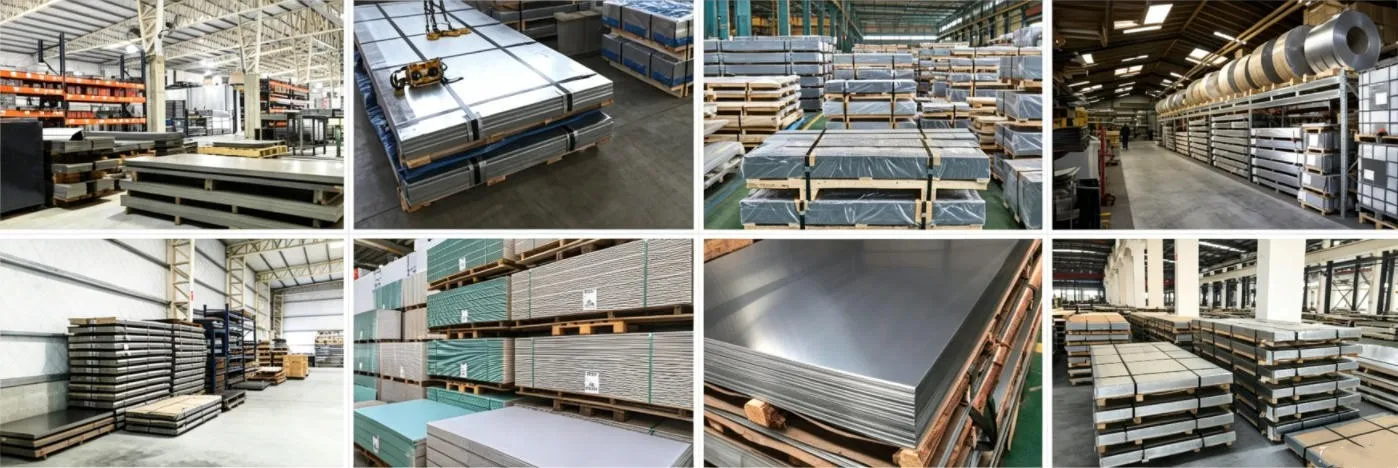



304 stainless steel medium-to-heavy plates rank among the most widely utilized industrial stainless steel materials across the fields of construction, pressure vessels, food processing, petrochemical equipment, and mechanical manufacturing. Global demand for ASTM A240 304 stainless steel plates continues to grow steadily. However, many buyers frequently raise the same question: What exactly are the factors that influence the price of 304 stainless steel medium-to-heavy plates?
This guide provides a detailed breakdown of the latest pricing determinants, technical specifications, processing costs, and procurement strategies. Its aim is to assist buyers in mitigating purchasing risks and optimizing their project budgets.
What Is 304 Stainless Steel Medium and Thick Plate?
304 stainless steel medium and thick plates are austenitic stainless steel plates with a thickness range of 4.0–25.0 mm. They offer excellent corrosion resistance, heat resistance, and low-temperature mechanical properties, while remaining non-magnetic. The applicable service temperature range is from -196°C to 800°C.
These plates are widely used in the manufacturing of pressure vessels, boilers, building structures, bridges, automotive components, chemical equipment, and daily-use products such as cabinets, sinks, and tableware.
According to the production process, 304 stainless steel medium and thick plates can be divided into hot-rolled and cold-rolled types, among which hot-rolled medium plates are more suitable for large structural components. In addition, 304 medium and thick plates provide excellent stamping and bending performance without heat-treatment hardening, making them suitable for a wide range of industrial processing applications.
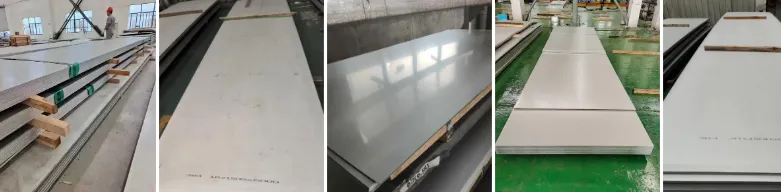
304 Stainless Steel Medium and Thick Plate Price (Latest 2026)
As of May 2026, 304 stainless steel medium and thick plate prices generally range between $2,000 and $3,200 per metric ton ($1.10–$3.50/kg). Prices are supported by stable, slightly rising nickel costs, maintaining a firm, positive bias for 2026.
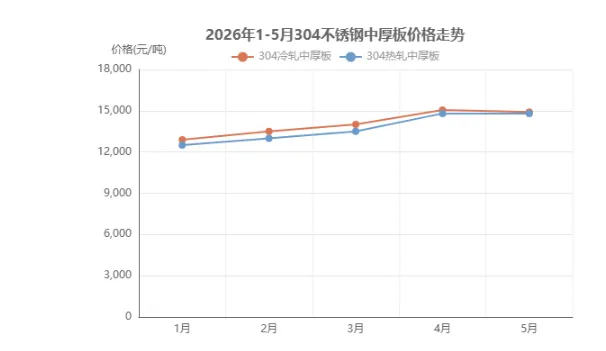
Price Trend Analysis:
Overall Trend: From January to May 2026, prices for 304 stainless steel medium-to-thick plates exhibited an upward trend characterized by fluctuations; both cold-rolled and hot-rolled prices recorded significant increases.
Cold-Rolled Medium-to-Thick Plates: Prices rose gradually from 12,900 RMB/ton in January to 15,050 RMB/ton in April, before retreating slightly to 14,900 RMB/ton in May.
Hot-Rolled Medium-to-Thick Plates: Prices climbed from 12,500 RMB/ton in January to 14,800 RMB/ton in April, holding steady at 14,800 RMB/ton in May.
Price Differential: Prices for cold-rolled medium-to-thick plates consistently remained higher than those for hot-rolled plates, with the price spread between the two fluctuating within a range of 250 to 400 RMB/ton.
Key Factors Affecting 304 Stainless Steel Plate Prices
1. Nickel Raw Material Costs
Nickel is a core alloying element in 304 stainless steel; consequently, fluctuations in global nickel prices directly impact the pricing of stainless steel plates. When nickel prices rise significantly, stainless steel manufacturers typically raise their prices.
2. Thickness and Weight
6 mm thick plates are relatively low in price, 20 mm thick plates are moderately priced, while 80 mm thick plates carry a significantly higher relative cost; ultra-thick plates typically require customized rolling processes.
3. Surface Finish
Different surface finishes affect both the aesthetic appearance and the processing costs; surfaces that have undergone polishing or precision grinding treatments are typically more expensive.
4. Processing Services
Additional manufacturing and processing services can have a significant impact on the final quotation. These services include:
Laser cutting, waterjet cutting, plasma cutting, CNC bending, drilling, pickling, and polishing.
How to Choose a Reliable Stainless Steel Plate Supplier?
When selecting a supplier, buyers should focus on verifying the following aspects: production capacity, inventory capacity, export experience, quality certification credentials, processing equipment, lead times, and comprehensive Material Test Certificates (MTCs).
Why More Industrial Buyers Choose GNEE?
GNEE specializes in supplying 304 stainless steel medium and thick plates for global industrial projects. We operate under an ISO 9001 and SGS-certified quality management system, maintain a regular inventory of more than 50,000 tons, and offer thickness ranges from 6–120 mm. Our products comply with ASTM, ASME, EN, and JIS standards, and we provide laser cutting as well as CNC machining services. To date, our stainless steel products have been exported to more than 120 countries worldwide.
In addition, we offer customized processing solutions including polishing, beveling, and cut-to-size fabrication to meet diverse industrial application requirements.
304 stainless steel medium and thick plates Specifications
| Parameter | Specifications |
|---|---|
| Thickness | 4.0–25.0 mm (common grades: 4.0, 5.0, 6.0, 8.0, 10, 12, 14, 16, 18, 20, 22, 25 mm) |
| Width | 1500 mm, 1800 mm, 2000 mm (some mills offer ultra-wide up to 2200+ mm) |
| Length | 6000 mm (standard), 8000 mm (optional for large structural applications) |
| Common Plate Sizes | 1500 × 6000 mm 1800 × 6000 mm 2000 × 6000 mm |
| Processing Type | Hot-rolled (HR) / Cold-rolled (CR) - HR: for high-strength industrial use - CR: higher surface precision, suitable for decoration or precision parts |
| Customization | Available via cutting-to-length or slitting; non-standard sizes supported upon request (may incur additional processing fees) |
Note: A thickness within the range of 25.0–100.0 mm is classified as a Thick Plate, while a thickness exceeding 100.0 mm is classified as an Extra-thick Plate.