



When choosing between SS 2205 and 316L stainless steel, one cannot simply compare the price per kilogram. For industrial buyers, the right decision depends on balancing material costs, corrosion resistance, mechanical strength, processing requirements, and expected service life.
When comparing the prices of SS 2205 and 316L stainless steel, buyers should consider both the initial procurement cost and the material's performance under actual operating conditions.
As of October 2026, public market reference data indicates that for certain categories of finished pipe products, the price per kilogram for duplex 2205 stainless steel can be significantly higher than that of 316L. The reference price for 2205 piping is approximately $4.80–$7.20 per kilogram, while for 316L piping, it is approximately $2.20–$4.30 per kilogram. These figures serve only as a reference range and do not represent definitive, universal market prices; actual quotes depend on product dimensions, manufacturing processes, order quantities, certification requirements, and delivery terms. Source: Public price comparison data from 2026.
SS 2205 vs. 316L: Price per Kg in October 2026
The first step is to distinguish a material price benchmark from a firm supplier quotation. Prices for stainless steel vary by product form, specification, and delivery terms.
| Product or price reference | SS 2205 / Duplex 2205 | SS 316L | Notes |
|---|---|---|---|
| Finished stainless steel pipe, indicative range | US$4.80–7.20/kg | US$2.20–4.30/kg | Published 2026 reference; specifications may differ |
| Finished welded pipe | US$5.00–7.00/kg | US$2.45–3.80/kg | Indicative published comparison |
| Finished seamless pipe | US$4.80–7.20/kg | US$2.85–4.30/kg | Indicative published comparison |
| Plate, sheet, coil, and bar | Quotation required | Quotation required | Price depends on product form and size |
| Export order, FOB/CIF | Quote required | Quote required | Freight, insurance, packaging, and trade terms matter |
Important: These ranges should be used for preliminary budgeting only.
What is the price difference per kilogram between duplex steel 2205 and 316L?
According to reference data for piping products from 2026, the price for 2205 ranges from approximately $4.80 to $7.20 per kilogram, while 316L ranges from approximately $2.20 to $4.30 per kilogram. This information is for reference only and does not represent the prevailing actual transaction prices as of October 2026. Pricing for steel plates, bars, pipe fittings, and export orders must be requested separately.
Why is SS 2205 more expensive than 316L?
Duplex stainless steel 2205 contains approximately 22% chromium, 5% nickel, and 3% molybdenum, with the addition of nitrogen in amounts that vary according to the specific grade and specification. Its higher chromium and molybdenum content provides superior resistance to localized corrosion.
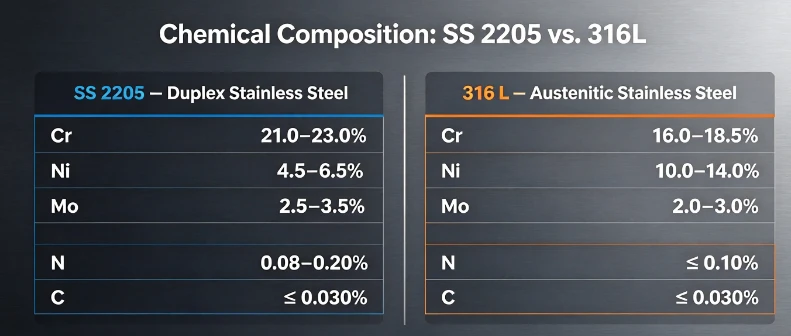
Compared to 2205, 316L generally contains a higher percentage of nickel but a lower percentage of chromium. Therefore, it is inaccurate to conclude that 2205 is more expensive simply because it has a higher nickel content. Actual pricing is determined by a complex interplay of factors, including the cost of alloying elements, steel mill surcharges, processing costs, and prevailing market conditions.
For instance, according to a report by Shanghai Metals Market (SMM), the alloy surcharge for 316L plate in October 2026 was 3.972 EUR/kg, while the surcharge for duplex 2205 was 3.994 EUR/kg. As these figures represent only the alloy surcharges-rather than the final price of the finished product-they should not be directly compared to the actual selling prices offered by suppliers. Source: SMM, October 2, 2026.
What are the primary material /standards for 2205 and 316L?
Duplex stainless steel 2205 is typically designated as UNS S31803 or S32205, with the European material designation EN 1.4462. Stainless steel 316L is typically designated as UNS S31603, with the European material designation EN 1.4404.
SS 2205 Material vs. 316L:Which Material Is Stronger?
Duplex 2205 generally offers significantly higher yield strength than 316L in comparable standard product conditions.
| Mechanical property | Duplex 2205 | 316L |
|---|---|---|
| Minimum yield strength, representative plate values | 450 MPa | 170 MPa |
| Minimum tensile strength, representative plate values | 620–655 MPa, depending on grade | Approximately 485 MPa |
| Minimum elongation | Commonly 25% | Commonly 40% |
| Microstructure | Ferrite + austenite | Austenitic |
Supplier of SS 2205 and 316L Stainless Steel
GNEE evaluates inquiries for Duplex 2205 and 316L stainless steel products based on customer-specified requirements-including product form, steel grade, dimensions, certifications, and delivery terms-subject to current supply capacity and stock availability.
In accordance with project specifications, buyers may inquire about the following:
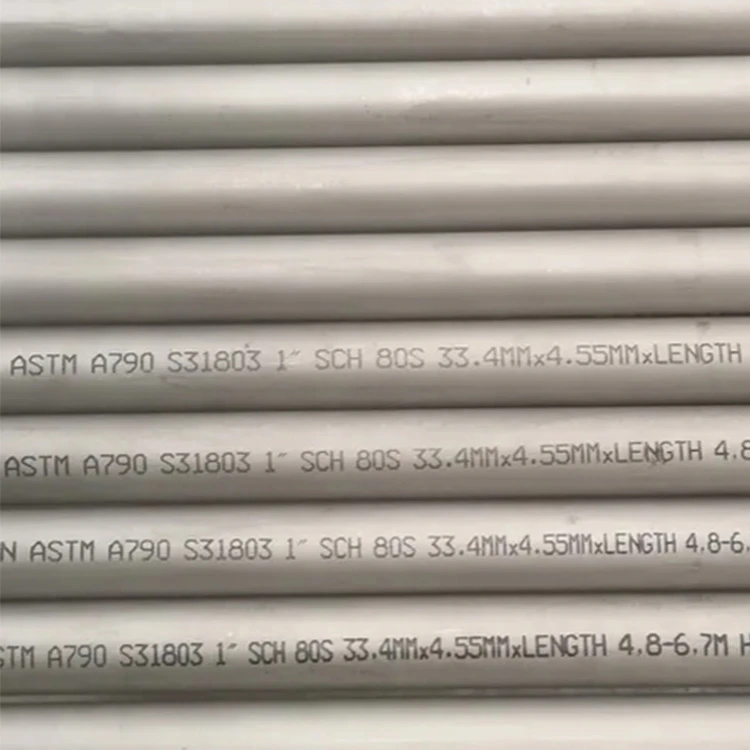
Pipes and Tubes: Applicable ASTM standards, outer diameter, wall thickness, schedule, length, and manufacturing method (seamless or welded).
Plates and Sheets: Thickness, width, length, surface finish, flatness, and cutting requirements.
Bars and Profiles: Diameter or cross-sectional dimensions, length, delivery condition, and dimensional tolerances.
Flanges and Pipe Fittings: Material grade, pressure rating, dimensions, flange face type, and end-connection requirements.
Quality Documentation: Mill Test Certificates (MTCs), heat/batch traceability, and any mutually agreed-upon inspection requirements.
Export Requirements: Protective packaging, shipping documentation, and mutually agreed-upon delivery terms.
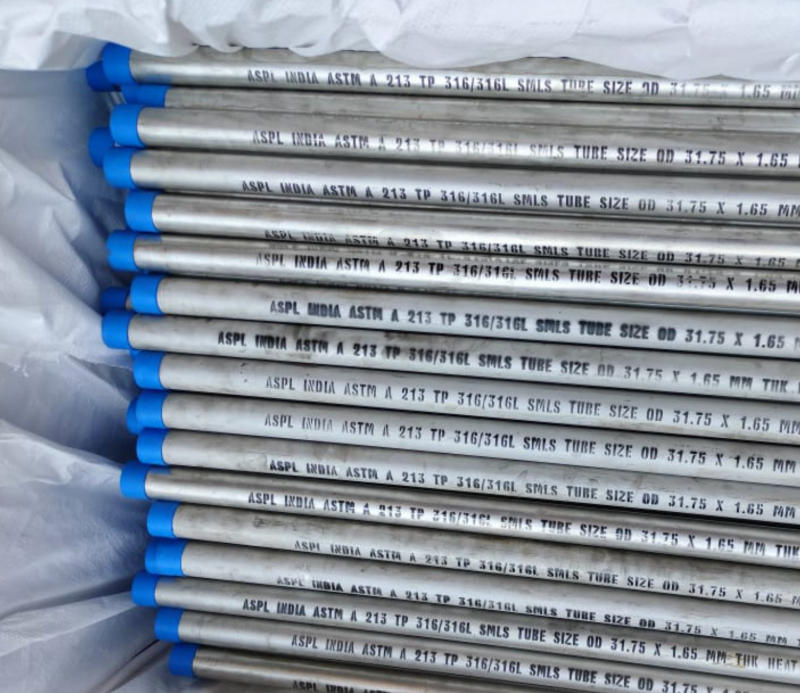
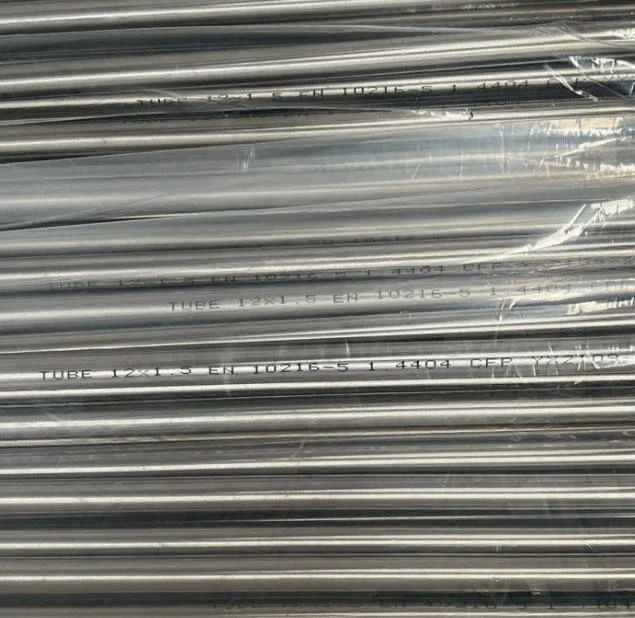
ASTM A213 TP316L Stainless Steel Heat Exchanger Tube




Request a comparable quotation from GNEE
If you are deciding between SS 2205 and 316L, send GNEE the product type, material standard, dimensions, quantity, operating environment, and delivery destination.
To help obtain a technically comparable quotation, include:
Required grade: UNS S32205/S31803 or UNS S31603.
Product form: Pipe, tube, plate, sheet, bar, flange, or fitting.
Applicable ASTM or EN standard.
Dimensions and quantity.
Required MTC and inspection documents.
Operating temperature and process-fluid conditions, where relevant.
Destination port and preferred Incoterms.