


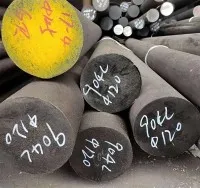


The production of hot-rolled seamless steel pipe generally requires two heating processes from billet to finished steel pipe, that is, heating before billet punching and billet punching before sizing. When producing cold rolled steel pipes, intermediate annealing is required to remove the residual stress of the steel pipe. The purpose of each tube heating is different, and the heating furnace may also be different. If the process parameters and heating control of each heating are inadequate, defects will occur for the tube blank (steel tube) and the quality of the steel tube will be affected.
The purpose of heating the tube blank before drilling is to improve the plasticity of the steel, reduce the deformation resistance of the steel, and provide a good metallographic structure for the rolled tube. The heating furnaces used are annular heating furnaces, traveling furnaces, inclined bottom heating furnaces and automobile bottom heating furnaces.
The purpose of reheating the perforated billet pipe before sizing is to increase and uniformize the temperature of the perforated billet, improve the plasticity, control the metallographic structure, and ensure the mechanical properties of the steel pipe. Heating furnaces mainly include foot reheating furnaces, continuous roller chimney reheating furnaces, inclined chimney reheating furnaces and electric induction furnaces. The purpose of annealing heat treatment of steel pipe in the cold rolling process is to eliminate the work hardening caused by cold working of the steel pipe, reduce the deformation resistance of the steel, and create conditions for the Continuous processing of steel pipe. The heating furnaces used in annealing heat treatment mainly include walking furnaces, continuous roller hearth furnaces and automobile hearth furnaces.
Common defects of heating tube blanks are uneven heating of tube blank (steel tubes), oxidation, decarburization, heating cracks, overheating, overburning, etc. The main factors affecting the heating quality of the tube blank are heating temperatures, heating rates, heating and holding time, and furnace atmosphere. Heating temperatures of the
tube blanks The temperature is too low or too high, or the heating temperature is not uniform. If the temperature is too low, the deformation resistance of the steel will increase and the plasticity will be reduced. When the heating temperature cannot guarantee that the metallographic structure of the steel is completely transformed into austenite grains, the tendency of cracks in the tube blank in the hot rolling process will increase. When the temperature is too high, serious oxidation, decarburization, and even overheating or overburning will occur on the surface of the blank tube.
Blank tube heating rate
The heating rate of the tube blank is closely related to the generation of heating cracks in the tube blank. When the heating speed is too fast, the tube blank is prone to heating cracks. The main reason is that when the surface temperature of the tube blank increases, the metal inside the tube blank and on the surface produces a temperature difference, resulting in inconsistent thermal expansion of the metal and thermal stress. . Once the thermal stress exceeds the fracture stress of the material, cracks will occur. The heating crack of the tube blank may exist on the surface of the tube blank, or it may exist inside. When the tube blank with heating crack is pierced, it is easy to form cracks or creases on the inner and outer surfaces of the tube blank.
Preventive measures: When the blank tube is still at low temperature after entering the heating furnace, a lower heating rate should be adopted, and the heating rate can be increased with the increase of the blank tube temperature. .
Heating time and retention time of blank tube
The heating time and retention time of tube blank are related to defects caused by heating, such as surface oxidation, decarburization, coarse grain size, overheating, and even overburning. Generally speaking, if the heating time of the blank tube at high temperature is longer, it is more likely to cause serious oxidation, decarburization, overheating and even overburning of the surface, and in serious cases, the steel tube will be scrapped.
Measures
Preventive A. Make sure the tube blank is heated evenly and completely transformed into austenite structure.
B. Carbides must dissolve in austenite grains.
C. The austenite grains should not be coarse, and mixed crystals cannot appear.
D. The blank tube cannot be overheated or overburned after heating.
In summary, in order to improve the heating quality of the tube blank and avoid defects caused by heating, attention should be paid to the following aspects when formulating the tube blank heating process parameters:
A. The heating temperature must be accurate to ensure that the drilling process is within the best temperature range for the tube blank.
B. The heating temperature should be uniform and strive to make the heating temperature difference between the longitudinal and transverse directions of the blank tube no more than ±10 degree C.
The metal burning loss is less, and overoxidation, surface cracks and blank tube bonding should be avoided in the heating process.
D. The heating system is reasonable, and reasonable coordination of heating temperature, heating speed and heating time (holding time) should be done to prevent the tube blank from overheating or even overburning.


