


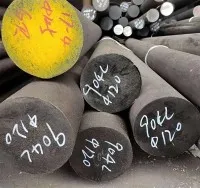


This article discusses the properties, strength, and uses of 5160 steel, a high-strength, low-alloy spring steel that is exceptionally strong and hard. By exploring its physical, chemical, and mechanical properties, this article hopes to show readers when to choose 5160 steel over other less suitable alloys for their project.

Physical properties of 5160 steel
It is important to understand the naming system for steel and its alloys, as the name reveals a lot about the composition of each alloy. Like aluminum, steel is named by a four-digit identifier, but unlike aluminum, each number contains important information about the percentage of carbon and associated alloying elements within the steel alloy. It should also be noted that there are discontinuities between the AISI and SAE nomenclature systems, but they generally overlap in terms of alloy names and will be treated as a single nomenclature entity in this article (AISI/SAE nomenclature index ).
The first digit of the steel alloy nomenclature represents the class of the steel alloy. In the case of 5160 aluminum, the 5 represents steel alloys that use chromium as the main alloying element. The second digit represents the concentration of said alloying element; 5160 steel therefore has 1% chromium by mass. The last two digits represent the specific carbon concentration, where they designate that the alloy has 0.XX% carbon. In the case of 5160 steel, that means the carbon concentration is 0.60% carbon, making it a medium to high carbon steel. Please note that this is not an exhaustive analysis, and to be considered a 5160 steel, the material must also meet the concentration tolerances for the other elements listed below:
0,75-1% Manganese
0,035% Phosphorus
Less than or equal to 0,15-0,3% Silicon
Less than or equal to 0,04% Sulfur

5160 steel is exceptionally hard and strong. It has a high level of fatigue resistance, great ductility and good spring qualities, useful for applications where flexibility is desired. Therefore, it is part of the "spring steels", which represent those alloys that are flexible but have sufficient strength to return to their original shape after deformation. Although not easy to weld or machine, 5160 steel can be heat treated, annealed, and hot worked to shape. It has a density of 7.85 g/cm3 (0.284 lb/in3).
Weakness against corrosion
5160 steel rusts easily, which is an unfortunate side effect of most steels. Oxygen from air and water attacks the iron molecules in steel and forms iron oxide, also known as rust, which can introduce cracks and weak spots into the steel. Chromium is added to help prevent this oxidation, but it is not enough by mass to completely prevent degradation. Any caustic damage will weaken 5160 steel, so it is important to consider your project's rust risk when applying this metal.

Mechanical properties
Summary of mechanical properties of 6063 aluminum alloy.
Mechanical properties | Metric Value | English Value |
Maximum tensile strength | 958MPa | 139000psi |
Tensile strength | 530MPa | 76900psi |
Volume module | 160GPa | 23200 KSI |
Modulus of elasticity | 205GPa | 29700 KSI |
Shear modulus | 80.0 GPa | 11600 KSI |
Applications of 5160 steel
5160 steel is, as described above, an ideal spring steel. Its high strength is often used in applications with smaller cross-sections under high stress, such as springs, fasteners and leaf springs in automotive suspensions. It is supplied by suppliers in the form of bars and tubes and can be used to create exceptionally strong components, provided you have the necessary tools to process it. 5160 steel is also used in the construction of scrapers and bumpers, and can make a great knife edge that is both durable and flexible. If you need ductility, hardness and strength, consider asking your supplier about 5160 steel.


