


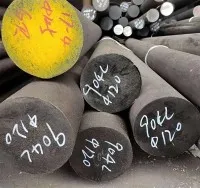


Exploring structural steel
From the buildings people visit, to the homes they live in, to the roads they travel, structural steel sheet is a multipurpose building material that provides manufacturing versatility and structural strength without extreme weight. This article delves into structural steel, its composition, characteristics, uses and much more.
What is structural steel?
Structural steel is a regulated category of steel that must meet industry standards for dimensional tolerances and composition. In the United States, steel grades are specified and regulated by ASTM International. Likewise, Europe and Canada have their own regulatory bodies and standards. Although Leeco Steel offers EN sheet steel and CSA G40.21 sheet steel, this article will focus on ASTM standards.
There is a wide range of structural steel grades, the most popular being ASTM A572 and ASTM A36. These grades of steel, along with other grades of structural steel, are primarily used for the construction of bridge and building frames.
They are also used in the construction of:
Freight cars
Construction equipment
truck parts
Machinery
Crane bars
transmission towers
truck frames
Research published by the American Institute of Steel Construction shows that structural steel contains 47% of all construction materials, so it is very likely that structural steel is responsible for part of the design in structures, buildings or bridges. that people meet.
Structural steel production and testing
To fully understand how structural steel varies from nonstructural steel, such as that used in the beds of trucks, ships, or military tanks, it is important to examine the composition of structural steel.
Steel can be made from raw materials or from recycling old steel. During the process of transforming recycled steel into new steel, existing steel is melted and refined to meet certain specifications. Making steel from raw materials is a much longer process.
Steel is an alloy containing carbon and iron, both available in abundance but rarely found in their pure form. To make steel from raw materials, iron is obtained from iron ore, which contains abundant iron oxides. Most of the iron ore in the United States is mined from taconite, which is found in abundance in Minnesota. During the mining process, taconite is ground to a sandy composition, and magnets are used to separate the iron ore (in the form of magnetite) from other substances and minerals.
Although iron is often believed to be strong and hard, raw iron ore is so soft that it can be cut with a knife and some muscle. Iron-based alloys obtain their strength from the addition of carbon.
An iron-carbon alloy is usually produced by combining coke with iron ore and applying heat until the coke ignites. Coke is a carbon-rich form of coal. As a result of this strong heating, the coke gives off carbon and attaches to the oxygens of the iron oxides, leaving a combination of carbon and iron. This process is called reduction.
After reduction, the material has about 4% carbon, which undergoes further heating and cooling processes to reduce the amount of carbon, making the material stronger and harder. As soon as the carbon content is less than 2.1% of the weight of the material, it becomes steel. To make structural steel, carbon must be reduced further until its composition is only 0,05% to 0.25%.
The final result is an affordable structural steel, 100% recyclable and with a high strength-to-weight ratio. There are different grades of structural steel, which vary to some extent in their composition. These compositions help considerably in establishing the necessary material for any specific project.
Furthermore, the steel can be further processed - by further heating and cooling treatments and/or the addition of alloys, for example, titanium, molybdenum and chromium - to increase hardness. These processes affect the overall brittleness, in most cases making the resulting material unsuitable for structural applications.
Structural steel composition
Below is the composition of two well-known structural steel grades: ASTM 572 and ASTM A36. Although other grades of structural steel have analogous compositions, they may also have additional alloys or have undergone additional processing.
| Degree | Carbon | Manganese | Match | Sulfur | Silicone |
|---|---|---|---|---|---|
| A36 | 0.25-0.29% | 1.03% | 0.04% | 0.05% | 0.28% |
| A572 | 0.18-0.23% | 0.5-0.7% | 0.035% max | 0.04% max | 0.150-0.3% |
| A514* | 0.12-0.21% | 0.85% | Not specified | Not specified | 0.28% |
A514 also contains 0,2% molybdenum, 0,48% chromium, 0,05% vanadium, 0,02% of titanium and 0.003% boron.
The presence of additional alloys that increase both hardness and brittleness is the main compositional difference between non-structural and structural steel. In some cases, additional alloys are capable of creating structural quality steel; However, in other cases, the steel produced is extremely brittle for use in structural capacities.
Resistance to yield and traction
Beyond chemical composition, stress and yield limits help establish the grade of steel as well as the overall application.
The highest point of stress is the elastic limit, at which the material will permanently change shape. For example, when someone jumps off a trampoline, the trampoline naturally bends to absorb the energy and weight, but after that person jumps off the trampoline, the trampoline will return to its original shape. The springboard's elastic limit would be the point at which it bends under energy and weight, and remains permanently bent even after the diver launches.
A vital characteristic of structural steel, the yield strength must have some give to absorb weight. For example, the yield strength in bridges is the maximum weight the bridge can tolerate before experiencing permanent damage.
Tensile strength refers to the point at which the folded material will break. In the trampoline example above, this is the energy and weight required to break the trampoline.
Below is a graph showing the tensile and yield points of three common types of structural steel. These points are calculated in kiloinches per square inch ("ksi") or pounds per square inch ("psi"), as indicated below. Sometimes they are also indicated in megapascals.
| Degree | performance point | Pull point |
|---|---|---|
| A36 | 36 ksi | 58-80 ksi |
| A572 | 42-65 ksi* | 0.5-0.7% |
| A514 | 100 ksi | 110-130 ksi |
Performance depends on thickness, but the most common grade is 50 ksi.
These two parameters are very important for engineers when planning the material needed for a specific project.


