


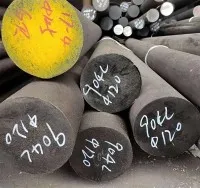


Q1: What are the usual grades of die steel?
There are many common grades, with different origins and brands, and there are detailed classifications, so only the most commonly used materials can be listed below for your reference: Hot work die steel: H13 die steel, 8407 die steel , 8418 die steel, FDAC die steel, 4Cr5MoVSi die steel, 1.2343 die steel, 1.2344 die steel, M302 die steel, M360 die steel, etc. Cold mold steels: Cr12MoV mold steel, D2 mold steel, Cr12 mold steel, DF-2 mold steel, XW-41 mold steel, XW-42 mold steel , DC53 mold steel, SKD11 mold steel, K110 mold steel, K306 mold steel, K360 mold steel, 1.2379 mold steel, etc. Plastic mold steel: S136 mold steel, 718H mold steel, CALMAX mold steel, S136H mold steel, NAK101 mold steel, NAK80 mold steel, NAK-PRM mold steel, 1.2711 mold steel, 1.2316 molds, 1.2083 mold steel, M200 mold steel, M340 mold steel, M238 mold steel, P20 Die Steel, P20+Ni Die Steel, MLQ Die Steel, etc. High-speed steels: Elmax SuperClean HSS, ASP 30 (PM 30) HSS, ASP 23 (PM 23) HSS, Vancron 40 HSS, ASP 60 HSS, SKH-9 HSS, SKH-59 HSS, HAP72 HSS, YXM4 HSS, S690 HSS, K490 HSS, K890 HSS. K890 HSS, ASP®
2052 HSS, E M42 HSS, ASP®
2060 HSS, M HSS, M42 HSS, M4 HSS, M35 HSS, 1.3247 HSS, etc.
Q2: What are the materials for stamping die steel?
The materials used in the manufacture of stamping dies are steel, carbide, carbide with steel joints, zinc-based alloys, low melting point alloys, aluminum bronze, polymeric materials, etc. At present, most of the materials used in the manufacture of stamping dies are mainly steel, and the common types of materials used for the working parts of dies are: carbon tool steel, low-carbon tool steel alloy, high carbon tool steel, high or medium chromium, medium carbon alloy steel, high speed steel, die steel, and carbide, cemented carbide steel, etc. 1. Carbon tool steel is most commonly used in dies, such as T8A, T10A, etc. The advantages are good processing performance and low price. The advantages are good machinability and low price. But the hardenability and red hardness are poor, the heat treatment deformation is large, the load capacity is low. 2. Low Alloy Tool Steel Low alloy tool steel is in the carbon tool steel based on the addition of the correct amount of alloying elements. Compared with carbon tool steel, it reduces quenching deformation and cracking tendency, improves the hardenability of steel, wear resistance is also better. Low alloy steels used in mold making are CrWMn, 9Mn2V, 7CrSiMnMoV (code CH-1), 6CrNiSiMnMoV (code GD), etc. 3. Commonly used high carbon and high chromium tool steel High carbon and high chromium tool steel Cr12 and Cr12MoV, Cr12Mo1V1 (code D2), have good hardenability, hardening and wear resistance The heat treatment deformation is very small, For high micro-deformation wear resistance tool steel, the load capacity is second only to high speed steel. But carbide segregation is serious, it must be repeatedly upset (axial upset, radial drawing) to change the forging, in order to reduce carbide unevenness, improve the use of performance. 4. High carbon chromium tool steel used in the mold of high carbon chromium tool steel Cr4W2MoV, Cr6WV, Cr5MoV, etc., its chromium content is low, eutectic carbide less, carbide distribution is uniform, heat treatment deformation is small, with good hardenability and dimensional stability. High speed steel has the highest hardness, wear resistance and compressive strength of all die steels, with high load capacity. W18Cr4V (code 8-4-1) and W6Mo5 Cr4V2 (code 6-5-4-2, US grade M2), which contains less tungsten, and the reduced carbon vanadium high speed steel 6W6Mo5 Cr4V ( code 6W6 or M2 low carbon), developed to improve toughness. High speed steels also require reforging to improve their carbide distribution.6. Matrix steels add small amounts of other elements to the basic composition of the high speed steel, increasing or decreasing the carbon content as appropriate to improve the properties of the steel. These grades of steel are collectively known as matrix steel. Not only have the characteristics of high speed steel, with a certain wear resistance and hardness, and the fatigue resistance and toughness are better than high speed steel, for high strength cold work die steel , material costs are lower than high speed steel. The base steels commonly used in molds are 6Cr4W3Mo2VNb (code 65Nb), 7Cr7Mo2V2Si (code LD), 5Cr4Mo3SiMnVAL (code 012AL), etc. 7. Cemented carbide and carbide steel have more hardness and wear resistance than any other type of die steel, but poor bending strength and toughness. The cemented carbide used for the molds is tungsten-cobalt, which can be used for molds with low impact and high wear resistance requirements. For high impact molds, a carbide with higher cobalt content can be used. Steel cemented carbide is made from powdered iron with a small amount of powdered alloying elements (for example, chromium, molybdenum, tungsten, vanadium, etc.) as a binder and titanium carbide or tungsten carbide as a phase. hard, sintered by powder metallurgy methods. Steel cemented carbide has a steel matrix, which overcomes the disadvantages of poor toughness and machining difficulties of cemented carbide and allows cutting, welding, forging and heat treatment. Cemented steel carbide contains a large number of carbides, and although the hardness and wear resistance are lower than those of cement carbide, they are still higher than other steels and can reach 68 to 73 HRC after cooling and the tempering


