


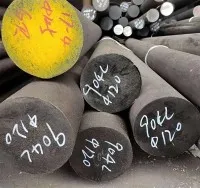


Stainless steel can be divided into five categories: coils, plates, profiles, steel tubes and parts, the most important of which are coils and plates.
Profile is a variety of different types of materials made of plates, including angle steel, flat steel, I-beam, channel steel and bar. Steel pipe mainly refers to seamless steel pipe and welded pipe, the main difference is whether it is formed at the same time. Parts and components mainly refer to pipe fittings, elbows and flanges and other small things.
The coil and the plate are actually the same, the factory form is not the same, the coil is one roll by roll, the plate is one by one, if the factory is the plate, also called original plate, generally thick plate , because it is very thick, it cannot be rolled, generally no more than 16mm can be rolled.
There are rolls, there are plates, many times they are plates, and the price of the coils and plates is not the same. If it is a purchase volume, it is calculated according to the actual weight, so the price is high, the board is calculated according to the theory, the price is low, the reason is that there is a minor difference, As 10mm thickness may actually be 9.6mm, it will have a price difference in between.
Stainless steel plate is divided into hot rolling and cold rolling according to the rolling process of rolling mill (rolling mill is the name of rolling plate machine). Hot rolling is usually marked as NO.1, cold rolling is labeled as 2B or BA (BA is better than 2B surface, brighter, close to mirror, mirror surface is not now Steel products Foshan stainless need to be processed), such as 304 is often a buy plate, that means the coil needs to be opened by plate-shaped machine, this machine is a flat machine. Through the leveling machine can be opened in different lengths, otherwise the conventional length is called fixed opening, which means fixed opening size, because customers according to actual needs often put forward different length requirements, this While the roll is important, the conventional plate cannot meet the requirements.
Domestic cold rolling is generally less than 3mm, hot rolling is generally more than 3mm, 3mm thickness is hot rolled and cold rolled, but the thickness of imported cold rolled plate can reach less 4mm or even below 6mm. Hot rolled plate from 3mm to 12mm is called medium plate, more than 12mm is called thick plate, can be thick to more than 120mm, and is called hot rolled medium plate, and cold rolled is laminated sheet in cold.
The corrosion phenomenon of stainless steel at high temperature was mentioned above. Next, let's talk about the corrosion phenomenon of stainless steel at room temperature. You know, temperature has a lot to do with the oxidation resistance of stainless steel, because the surface oxidation temperature of stainless steel with different properties is different, so the correct selection of stainless steel must consider what temperature to use and then consider other performance aspects and requirements. Speaking of it, you should have a little understanding of the stainless steel Foshan stainless steel, and the stainless steel of the stainless steel is conditional. So how does galvanic corrosion occur? First of all, you should know that the elements and compounds of the material world have different electrode potentials (electrode potentials), that is, there are electrode potentials between different substances, and once there is a solution or electrolyte to enrich the two substances, a battery circuit is created to form a microcurrent. This means that galvanic corrosion is a common phenomenon.

(1) Factors
caused by pitting corrosion (1) stainless steel surface inclusions: there are oxides, sulfides, silicates and other inclusions on the surface, if the surface encounters an aqueous solution attached to the previous one, the water is electrolyzed between the two substances, it is generates a microcurrent, electrolysis of water into hydrogen ions and hydroxide ions, and hydroxide and chromium ions can undergo chemical reactions, become chromium hydroxide and corrosion.
(2) Rough surface of stainless steel: There are rough surfaces such as pockmarks or hemp surfaces on the surface. The rough surface is easy to accumulate suspended particles (dust) in the air, and the dust adsorbs water in the air, so the presence of water, electrolysis of water under the action of the electrode potential between the two substances, decomposition of hydrogen ions and hydroxide ions, the hydrogen oxide ions react with chromium and spoil.
(3) Chloride ion environment: When the surface of stainless steel is in an atmosphere with chloride ions, chloride ions selectively destroy the blunt surface Foshan stainless steel film, selective due to the existence of inclusions, rough spots, component segregation and differences in mechanical properties on the surface of stainless steel, chloride ions are electrolytes, chloride ions and oxygen can generate hypochlorous acid, hydroxide ions react with chromium to generate chromium hydroxide, once the film of passivation, a concentration of corrosion will occur, also known as pore corrosion.
(2) Tissue corrosion:
Tissue corrosion is also known as intergranular corrosion. In austenitic stainless steel or austenitic and ferritic duplex steel, the carbon element in the steel dissolves into austenite with heating, such as in hot rolling process, the steel is heated to 1000-1200 degree C, the Carbon element starts to dissolve in austenite at 900 degree C, and carbon element at 1050 degree C basically completely dissolves in austenite. However, during the cooling process, carbon precipitates from the austenite and combines with chromium in the intergranular to become the Cr23C6 carbide. The chromium content in the intergranular is reduced, resulting in the depletion of chromium, which also makes the oxidation prevention function.
(3) Stress corrosion:
During hot rolling deformation, cold drawing deformation, cold rolling deformation and heat treatment of stainless steel, the residual stress within the steel base will cause uneven performance of the through bar. In particular, cold deformed surfaces, due to unique changes in the network, are easily affected by external environmental influences (such as friction, scratches, collisions and erosion concentrated by corrosion) and the additional stress piles are greater than the force intergranular atomic.
