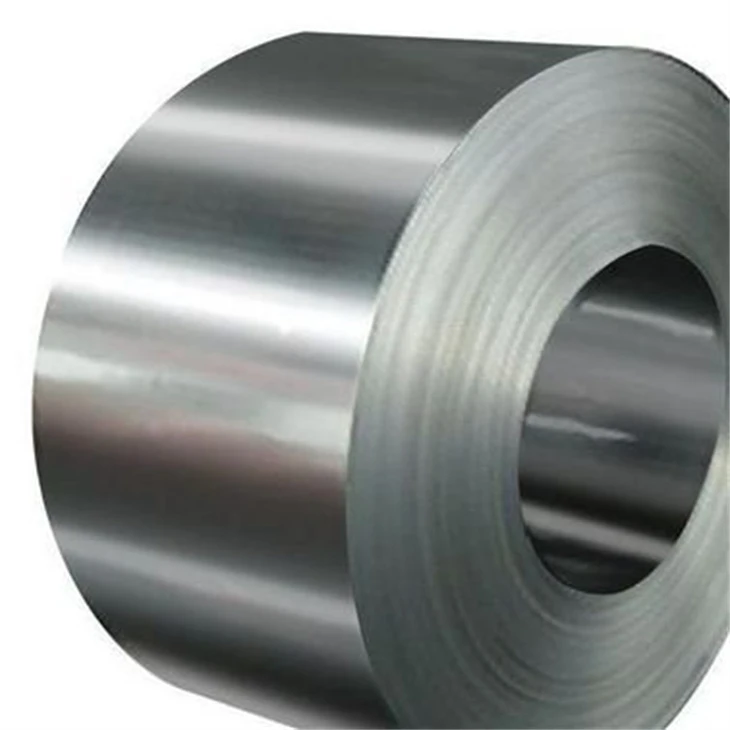
Steel Coil Hot Rolling Process
Hot rolling uses slabs (mainly continuous slabs) as raw materials, and after heating, the strip is made by roughing mill and finishing rolling machine. The tropical steel of the last rolling stand is finished rolled and cooled to a set temperature by laminar flow. It is wound into steel coils by coiling machine, and different finishing operations are carried out on the coil according to different requirements of users. Production lines (leveling, straightening, cross-cutting or cutting, inspection, weighing, packaging, marking, etc.) are processed into steel plates, flat strips rolling and cutting. Simply put, a slab is heated, heated (i.e. hot, red-hot sheets of steel on TV), rolled, and trimmed into steel plates.
Ordinary Grade Hot Rolled Steel Coil
Question 235
Question 345
SS400
SPCC
SPCE
SPCH
Cold rolling process for steel coils
Cold rolling: Using hot rolled steel coils as raw materials, oxidizing the skins and removing scales, and then carrying out tandem cold rolling. The finished products are laminated hard rolls. Cold work hardening due to continuous cold deformation causes the strength, hardness and toughness of rolled hard rolls to increase. The plastic index decreases, so the stamping performance will deteriorate and can only be used for simple deformed parts. Hard rolled coils can be used as raw materials for hot dip galvanizing plants because hot dip galvanizing units are provided with annealing lines. The weight of rolled hard coil is generally 6~13.5 tons. The coil is wound continuously at room temperature under normal temperature. The inner diameter is 610 mm.
Cold Rolled Coil Product Features:
Because it has not been annealed, its hardness is very high (HRB is greater than 90) and its machining performance is extremely poor. It can only perform simple directional bending processing (with a direction perpendicular to the pickup direction) of less than 90 degrees.