


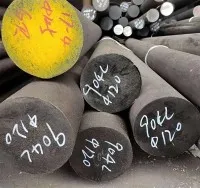


Steel is everywhere. Look at some objects in the room he is sitting in right now, and it is guaranteed that there is steel present in several of the objects around him. It is difficult to imagine a world without steel.
We thought it was worth helping people learn a little more about steel: where it comes from, how it is made, the different types of steel options and, of course, all the different applications of steel. Whether it's a steel pipe, a steel bar, or a steel plate, we rely on manufacturers to provide us with an almost impossibly strong product.
What is steel?
Iron is the most abundantly available mineral distributed throughout the Earth's core and mantle, although it is extremely soft in its pure form and needs to be oxidized into iron oxide. The poor strength and durability of this form make the use of iron extremely difficult. To improve these properties, up to 2% carbon is added to pure iron, producing a very durable and hard substance called steel.
Due to its great tensile strength and strength, steel is used to manufacture everything from sewing needles to oil tankers, as well as the tools necessary to produce them. However, other types of metals are often added to steel to incorporate different qualities depending on the intended use.
These metallic additions have so far produced 3,500 different variations of steel, each with different structural, chemical and physical characteristics and properties. Even more surprising is the fact that more than 75% of these variations were introduced in the last two decades to meet rapidly evolving industrial demand.
Different types of steel
Let's explore the most commonly used types of steel, their distinctive properties, and their uses. There are 14 main types of steel, with several subcategories within the categories.
1. Carbon steel
Most of the world's steel is a form of carbon steel. It is composed of iron, carbon, and specific amounts of other alloying elements. As the main alloying element of carbon steels, carbon accounts for about 90% of all steel production.
It helps create a stronger and much more rigid metal. This is because the atoms present in carbon allow it to travel through the crystalline lattice of iron, slightly distorting the lattice and filling the gaps between the metal atoms.
Given this characteristic, the resulting carbon steel products are extremely hard. What determines this resistance is the amount of carbon present, also classifying it into three categories:
A) High carbon steel
High carbon steel typically contains between 0.61% and 1.5% carbon, resulting in a strong, brittle, and hard steel. To improve its wear resistance, it undergoes appropriate heat treatment. In addition to being used for high-strength wires and springs, it is a useful material for producing shock-absorbing machinery.
B) Medium carbon steel
This variant incorporates a carbon content of {{0}}.31% to 0.6%, which results in a slightly ductile steel with greater tensile strength than low carbon steel. To harden it, it is usually treated with tempering, which is a form of heat treatment.
As it is very malleable and can be molded into a wide variety of shapes and sizes, this type is the most used of the three. From skyscrapers to fences, bridges and houses, you will see it used everywhere.
C) Low carbon steel
Low carbon steel (or mild steel) contains up to 0.3% carbon. Although it offers great malleability and ductility, low carbon steel is characterized by its low tensile strength, which can be improved through the cold rolling process.
This consists of rolling steel between two polished rollers under high pressure conditions. Among its most common uses is the production of sheets, boxes, tubes, chains, wires, boxes, rivets, vehicle frames, etc.
2. Alloy steel
Alloy steel is made up of varying amounts of different metals in addition to iron. These additions help manipulate the properties of the steel to serve specific applications. Metals such as aluminum, nickel, silicon, chromium, manganese, titanium and copper are used to some extent.
The use of these metals results in characteristics not found in carbon steel. The desired changes occur in the steel's strength, formability, corrosion resistance, ductility, and hardenability. Alloy steel is often used to make pipes, automobile parts, power generators, transformers, and electric motors.
Alloy steel generally responds better to different types of treatments and is used in more specialized industries, such as household appliances, shipbuilding and automotive. It can come in stronger or more tactile forms, those that have high resistance to oxidation, or those that are more suitable for welding.
A) Low alloy steel
Low alloy steel is a grouping of ferrous metals that are incorporated to improve the overall mechanical properties of a material, which are typically much stronger than plain carbon steel.
Elements such as molybdenum, nickel and chromium are added to improve the ductility and hardness of the material, which would otherwise be much weaker and softer. Low alloy steel is often used for the creation of sheet metal, automotive parts, and structural shapes.
B) High alloy steel
High alloy steel is made up of various ferrous metals that are combined to alloy elements in order to create certain phases and stabilize them. Stainless steel alloys are high alloy steels.
Thanks to elements such as nickel and molybdenum, high-alloy steel has the ability to be impeccably strong and highly resistant to corrosion.
Depending on the combination of alloying elements, alloy steels encompass numerous different variations. We have put together the most used types:
3. Tungsten steel
Tungsten, also known as tungsten, is basically a dull silvery metal that boasts the highest melting point of all types of metal in its purest form. What makes it stand out from other types of metal is its resistance and its ability to withstand high temperatures. Due to these characteristics, different steel alloys use this metal to improve resistance to corrosion and wear.
In addition, rocket engine nozzles use tungsten steel to achieve high heat resistance. If combined with cobalt, nickel and iron, tungsten steel can be used to make turbine blades for many types of aircraft. Additionally, many other machines and tools require high heat resistance, which is why they use tungsten steel.
4. Nickel steel
Nickel steel alloy is one of the most widely used steel alloys worldwide. In addition to a high nickel content, around 3.5%, it comprises approximately 0.35% carbon. Its specialty is that the addition of nickel strengthens structural steel without a proportional decrease in ductility. This increased toughness helps resist fractures that can be caused by impacts, crashes, and high loads.
Furthermore, upon cooling, nickel decreases the distortion value of the steel. Nickel steel offers incredible responsiveness to heat treatment, as the addition of nickel reduces the temperature of the steel, making it ideal for heat treatment.
5. Manganese steel
Manganese steel is a work-hardening steel that has a manganese content of 11% to 14%. Due to its excellent work hardening and wear resistance characteristics, manganese steel is used in the manufacture of complex railway tracks. Other current applications are shovel buckets, shot blasting cabins, scrapers, anti-drill safety plates, etc.
6. Vanadium steel
Vanadium steel is known for its corrosion resistance properties as well as its ability to absorb impacts. In addition to being used for tubes and conduits that carry chemicals, vanadium steel is used in the form of a thin layer to bond titanium to steel in aerospace applications.
Just 1% vanadium and chromium are enough to achieve resistance to shock and vibration, making it ideal for automotive applications.
7. Chrome steel
The addition of chromium decreases the critical cooling rate and increases the peel resistance, wear resistance and high temperature resistance of the steel. It is mainly used to increase corrosion resistance. High elasticity and tensile strength, chromium steel is often used to make machinery and automobile parts, rock crushers, and safes.
8. Chrome-vanadium steel
Chrome-vanadium steel uses both chromium and vanadium, combining the characteristics of each. With extremely high tensile strength, steel can be easily cut but is not brittle. Its most common uses are gears, axles, connecting rods, vehicle frames, etc.
9. Silicon steel
When it comes to magnetic force, silicon steel is the most important material used today. While small amounts of silicon steel are used in pulse transformers and small relays, applications such as large motors and generators use tons of silicon steel.
Among its properties, saturation reduction, resistivity, magnetostriction and magnetocrystalline anisotropy are highly appreciated. With a silicon addition of just 1 to 2%, this steel is the most used to produce permanent magnets.
10. Molybdenum steel
As a valuable alloying agent for steels, molybdenum helps improve steel toughness, weldability and corrosion resistance. This makes it ideal for use in structural steels and therefore they are widely used in marine environment applications. Oil and gas pipelines and ball bearings also use molybdenum steel.
11. Cobalt steel
Cobalt alloys offer enormous resistance to corrosion, wear, high temperatures and magnetic properties. Some of the toughest applications for cobalt are gas turbine blades and scoops. However, this type of steel is more commonly used to make cutting tools.
12. Aluminum steel
The addition of aluminum helps incorporate the ability to reflect heat. With a density about one-third that of aluminum steel, it is used in applications where low weight and high strength are essential.
Thus, aluminum steels are widely used to manufacture motorcycle and car exhaust systems. Apart from the automotive industry, aluminum steel is used variously in power generation, architecture, food preparation, packaging, electrical transmission applications, etc.
13. Tool steel
Tool steels are the type of steels that are used to produce different types of tools used for a wide range of purposes, including impact tools, cutting tools such as knife making tools, and others. They are made up of metal alloys such as tungsten, cobalt, molybdenum and vanadium in varying amounts. They are not only hard and durable, but also very heat resistant.
Depending on the type of tool to be manufactured, the quality of the tool steel differs, giving rise to numerous variants within the tool steel category:
A) Impact resistant tool steel
As the name suggests, this variant of tool steel is designed to offer high impact resistance at different temperature levels. With a low content of carbon, silicon and molybdenum, it is abrasive and moderately resistant. This steel is mainly used to make tools such as screwdrivers, punches, chisels and tools used in riveting.
B) Special purpose tool steel
This tool steel is specifically designed to achieve moderate hardness and malleability, using a grade of low alloy steel. They are often used to make wrenches, bolts and thread taps.
C) Hot tool steel
Hot work tool steel is used to produce tools that require high heat resistance for long periods of time, such as those used in forging, extrusion, punching, casting, and hot cutting blades.
D) Water hardening tool steel
As the cheapest type, water-hardening tool steel is the most commonly used in tool production. To add hardness to objects or tools, this steel is quenched with water. With great resistance to surface wear, this steel is often used to make files, cutters, hammers, blades and similar items.
E) High speed tool steel
High speed tool steel is composed of tungsten, molybdenum and vanadium steel alloys. These components are hard and retain their hardness when exposed to high temperatures, helping to produce a perfect steel for high-speed machinery such as drills, reamers, saws, punches, taps, etc.
F) Cold tool steel
This variant of tool steel incorporates a high chromium content to achieve a low distortion property during hardening, which can be done using air or oil. This feature makes the tools produced not crack easily. Being a very strong steel, cold tool steel is ideal for making knife blades, stamping dies, coining tools, etc.
G) Mold steel
Mold steel uses carbon steels to make injection and compression molds for plastics. Additionally, another common application is zinc die casting.
14. Stainless steel
Although stainless steel is made up of several metal alloys, chromium is the main element and constitutes between 10 and 20% of the total composition of the steel. Previously known as "Rustless" steel, stainless steel is very popular for its appearance and its great resistance to rust. Precisely, it is approximately 200 times more resistant to oxidation than other types of steel, especially when the amount of chromium is greater than 11%.
Due to its high corrosion resistance capabilities, stainless steel is the most expensive type of steel. Being a very durable type, stainless steels are able to withstand the wear and tear that occurs with daily use. To further improve its resistance to scratches and corrosion, the invisible layer of chrome serves to prevent oxidation. Other metallic components of stainless steel are molybdenum and nickel.
Depending on the application, the sizes and grades of stainless steel can be different, and can come in the form of sheets, bars, tubes, plates and wires. Depending on the crystalline structure and mechanical properties of stainless steel, it can be classified into several types:
A) Ferritic stainless steel
Ferritic steel contains about {{0}}% chromium, up to 0.1% carbon, traces of nickel and other alloying metals in small quantities such as aluminum, molybdenum and titanium. Ferritic steels are tough, strong and magnetic, and can be further strengthened by cold working. However, they do not respond to heat treatment, meaning they cannot be hardened using this technique.
B) Austenitic stainless steel
Austenitic steels have a much higher chromium content than their stainless counterparts. The chromium content in this type of steel can be up to 18%, while other elements are nickel, which constitutes 8%, and carbon, with 0.8%. Although austenitic steel does not respond to heat treatments, it is popular for its non-magnetic properties, making this steel one of the most widely used in the world. Some common uses are manufacturing pipes, food processing equipment, and kitchen utensils.
C) Martensitic stainless steel
Composed of between 11 and 17% chromium, martensitic steel contains approximately 1.2% carbon and less than 0.4% nickel. Martensitic steels not only respond to heat treatments, but also have magnetic properties. Dental and surgical instruments, knives, blades and other cutting tools use martensitic stainless steel.
D) Duplex stainless steel
Duplex steel is simply a combination of ferritic and austenitic steels, resulting in a steel much stronger than both alone. It is not only weldable, but also corrosion resistant. However, it is not magnetically strong.
E) Precipitation hardening stainless steel
This steel is composed of 17% chromium and 4% nickel, resulting in a variety of hardened steel. In addition, other metals are added in varying amounts, such as aluminum, copper and niobium. This type can be molded into different shapes, making it ideal for use in engine components and nuclear waste containers. It also offers moderate corrosion resistance.


