Is AISI 316 the same as ss316?
AISI 316 and SS 316 are essentially the same material, both representing the same grade of molybdenum-bearing austenitic stainless steel. "AISI" (American Iron and Steel Institute) is a standards-setting body, while "SS" is an abbreviation for "Stainless Steel"; therefore, "SS 316" is commonly used as a shorthand for AISI 316. AISI 316 contains 16% chromium, 10% nickel, and 2% molybdenum, whereas SS 316 contains 18% chromium, 12% nickel, and 2% molybdenum. Because SS 316 contains a higher proportion of chromium, its corrosion resistance is superior to that of AISI 316.
AISI 316 equivalent material
| GRADE | SS 316 | JAPAN JIS | SUS 316 |
| USA | UNS S31600 | RUSSIAN AFNOR | Z7CND17‐11‐02 |
| GERMAN WERKSTOFF NR. | 1.4401 / 1.4436 | BRITISH BS | 316S31 / 316S33 |
| RUSSIAN GOST | - | SWEDISH SS | 2347 |
| EUROPE EN | X5CrNiMo17-12-2 / X3CrNiMo17-13-3 |
Chemical Composition
| Element | SUS316 / SS316 (%) | SS316L (%) |
|---|---|---|
| Chromium | 16.0 – 18.0 | 16.0 – 18.0 |
| Nickel | 10.0 – 14.0 | 10.0 – 14.0 |
| Molybdenum | 2.0 – 3.0 | 2.0 – 3.0 |
| Carbon | ≤ 0.08 | ≤ 0.03 (low carbon) |
Mechanical Properties
| Property | SUS316 / SS316 | SS316L |
|---|---|---|
| Tensile Strength (Rm) | 515 – 750 MPa | 485 – 700 MPa |
| Yield Strength (Rp0.2) | ≥ 205 MPa | ≥ 170 MPa |
| Elongation | ≥ 40% | ≥ 45% |
| Hardness (HB) | ≤ 217 | ≤ 217 |
What is the difference between 316 and 316L stainless steel?
Both SS316 and SS316L are high-performance, molybdenum-bearing austenitic stainless steels; the primary difference between the two lies in their carbon content. SS316L (the low-carbon variant, with a carbon content of ≤ 0.03%) performs superiorly in applications involving welded components, helping to prevent corrosion; whereas SS316 (the standard-carbon variant, with a carbon content of ≤ 0.08%) possesses slightly higher strength and hardness.
Corrosion Resistance of 316 and 316L Stainless Steel pipe
Both 316 and 316L stainless steel pipes offer excellent corrosion resistance, particularly against chlorides and in marine environments, due to their 2-3% molybdenum content. 316L (Low Carbon) is generally superior because it resists sensitisation and intergranular corrosion after welding. While 316 has slightly higher strength, 316L prevents carbide precipitation, making it better for welded, high-corrosion applications.
What is the density of 316 and 316L stainless steel pipe?
The density of 316 and 316L stainless steel pipes is approximately 8.0 g/cm³ (0.289–0.290 lb/in³ or 8000 kg/m³). This consistent density applies to both grades, making them an excellent choice for highly corrosive environments such as marine, chemical, and food processing applications.
316 and 316L Stainless Steel Pipe: How to Choose?
Choose 316L stainless steel pipe for superior corrosion resistance in welded applications, such as chemical processing, marine environments, and pharmaceutical systems, due to its low carbon content (0.03% max) which prevents weld decay. Select standard 316 for its higher mechanical strength in high-temperature or non-welded structural applications.
If you have project-specific requirements for 316L stainless steel tubing, we invite you to place an order. GNEE maintains a substantial inventory of popular products for you to choose from. Available in both seamless and welded forms, our products can be customized to your specifications. For detailed chemical composition data or to request free samples, please contact our facility immediately. We offer competitive pricing and exceptional service.
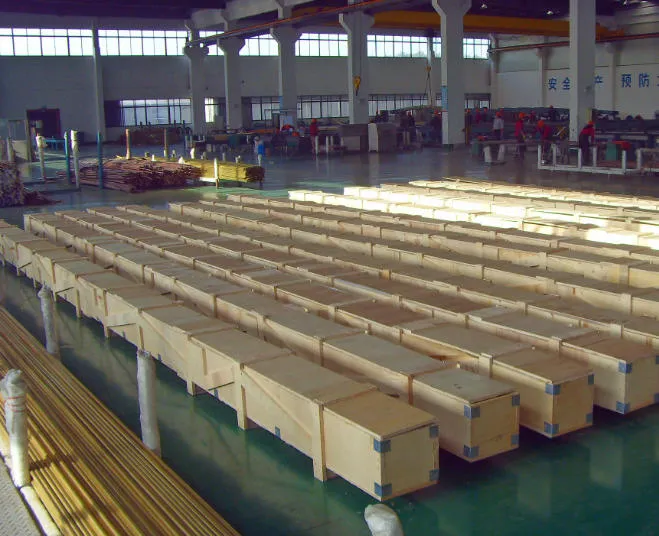
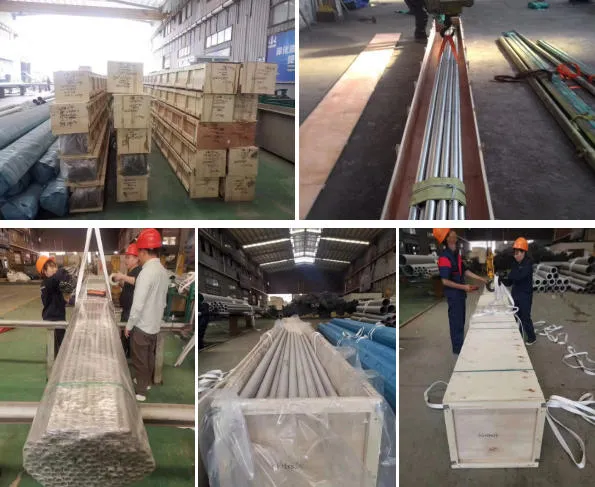
Our products are packaged using waterproof paper and steel strapping, adhering to standard export requirements for maritime shipping. This packaging is suitable for various modes of transport and can also be customized to meet specific client requests.
Packaging
Standard Export Packaging for Stainless Steel Products
1. Polished surface finish; 2. Bundled packaging;
3. Wooden crate packaging; Wooden pallet packaging;
4. Containerized or bulk cargo shipping; 5. Customized according to client requirements.