


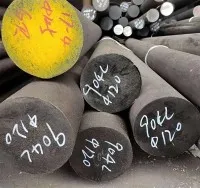


What are 4140 and 4130?
{{0}} With a maximum carbon content of 0.38% to 0.43% and other components such as silicon, manganese, phosphorus, sulfur, chromium and molybdenum, 4140 steel is a type of chrome steel. Low alloy steel is used. But it is robust, robust and viable.
{{0}} With a maximum carbon percentage of 0.28% to 0.33%, 4130 steel is a steel alloy that also includes manganese, phosphorus, sulfur, silicon, chromium and molybdenum . It is also low alloy steel. However, it is resistant, weldable and machinable.
Applications of 4140 and 4130
4140- The qualities of AISI 4140 round bars make them useful in a variety of sectors. Some of its uses include the production of crankshafts, gears, sprockets, and other components.
4130- When 4130 steel is used in manufacturing processes such as milling and welding, many different products can be created. Currently, it plays an important role in the automotive sector and is used to make tools such as cutting tools, drill bits and gears.
Difference Between 4140 and 4130
The difference between comparisons 4140 and 4130 is mainly based on how the two variants are put together. The elemental composition is the same for both variations. While 4130 has 0-28%-0.33% carbon, while 4140 has 0.38%-0.43%, the amount of carbon is different. This differentiation is responsible for the varied characteristics produced by the variants.
4140 steel is more hardenable and stronger than 4130 steel due to its higher carbon content. 4140 is typically a superior material to employ for machined billet components where discontinuities and variations in section, as well as thicker overall sections, are present due to its deeper hardening characteristics. Because of this, 4140 is frequently easier to obtain and more affordable in bar and plate forms, while 4130 is easier to find in AISI 4130 round bars and sheet forms.
The original machined 4140 steel fabrication element that is generally available has a better chance of hardening (to the normalized level) if there is no subsequent heat treatment than when using 4130 steel. If mixed with other chromium alloys with a similar carbon concentration , like other 4140 parts, or components manufactured from 4340, etc., 4140 has the potential to produce a significantly stronger part. Except for a possible reduction in weldability, the use of 4140 in a combination weld is not prohibited or diminished. However, most manufacturers will not experience any problems with good welding techniques, pre- and post-heat operations, and proper welding rod selection.
Depending on the type of steel used, 4130 N will have a yield strength ranging from 60 to 75 ksi; Cold drawn seamless tubes will be closer to the 75 ksi mark, while hot rolled bars and plates will be closer to the 60 ksi mark. 4140 N bars and plates, on the other hand, will be closer to 100ksi. Additionally, 4140 N has slightly better machinability than 4130 N. Not as soft as 4130 is the tougher 4140.


