


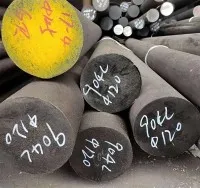


Stainless steel refers to steel that is resistant to weak corrosive media such as air, steam, water and aggressive chemical media such as acid, alkali and salt, also known as acid-resistant stainless steel. In practical applications, steel resistant to weak corrosive media is often called stainless steel, and steel resistant to corrosion of chemical medium is called acid-resistant steel.
304 stainless steel: a common stainless steel material, high temperature resistance of 800 degrees, with good processing performance, high toughness and other characteristics, widely used in industry, furniture decoration, food and medical industry. 304 is a general purpose stainless steel widely used in the production of mechanical equipment and parts that require good comprehensive performance (corrosion resistance, formability). To maintain the inherent corrosion resistance of stainless steel, the steel must contain more than 18% chromium and more than 8% nickel.
316L Stainless Steel: 316L is a grade of stainless steel that is the American standard. The corresponding national standard grade of stainless steel material is 022Cr17Ni12Mo2. The "L" in 316L indicates that 316L is a homologous material with a lower carbon content than 316. "L" means Low in English.
Mechanical properties of 316L stainless steel: tensile strength σb (MPa): Greater than or equal to 480; Conditional elastic limit σ0.2 (MPa): Greater than or equal to 177; Elongation δ5 (%): Greater than or equal to 40; Section contraction ψ (%): Greater than or equal to 60; Hardness: Less than or equal to 187HB Less than or equal to 90HRB Less than or equal to 200HV; Density: 8.0g/cm3; Heat capacity ratio (20 degree): 0.502J/(g*K)
Difference between 304 stainless steel and 316L stainless steel:
(1) 316L stainless steel contains Mo, which has better corrosion resistance than 304 stainless steel in high temperature environments, so in high temperature environments, engineers generally choose parts of 316L material (or other materials more resistant to high temperatures).
(2) The alloy elements of 304 stainless steel and 316L stainless steel have different proportions.
(3) 316L mainly increases the proportion of Ni content, so that its corrosion resistance is stronger than 304, and it is more suitable for use in chemicals, seawater and other environments.
(4) The cost of 316L is higher than that of 304. 304 stainless steel is more common and is mainly used in kitchen and bathroom appliances, digital products, equipment casings, outdoor products, tanks/cylinders, frames support etc. 316L stainless steel is generally used in scenarios that require better intergranular corrosion resistance and better welding processing performance.


