


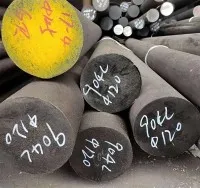


If you are looking for EN 1.4021 stainless steel bars, GNEE offers high-quality bars that meet international standards such as ASTM, DIN, JIS, and ISO. Our EN 1.4021 bars (equivalent to AISI 420) are ideal for applications requiring excellent hardness, wear resistance, and moderate corrosion resistance, such as cutting tools, surgical instruments, bearings, and precision industrial components. We provide full certification, including ISO 9001, SGS, BV, and Mill Test Certificates (MTC 3.1), and offer free samples for evaluation before purchase. The advantages of our EN 1.4021 bars include superior hardness and wear resistance, good corrosion performance in light-duty environments, customizable sizes, competitive pricing, and fast delivery, making them a reliable choice for demanding industrial applications.
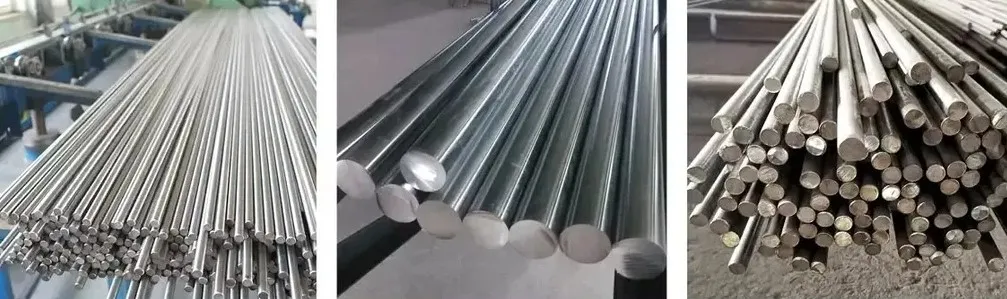
EN 1.4021 Stainless Steel Bar Specification
| Item | Specification |
|---|---|
| Material | EN 1.4021 / AISI 420 |
| Steel Type | Martensitic stainless steel |
| Standard | EN 10088-1 / ASTM A276 / AISI 420 |
| Surface Finish | 2B, BA (Bright Annealed), Polished, No.4, Mirror (8K) |
| Available Forms | Round bars, square bars, flat bars |
| Diameter / Size Range | - Round Bars: 5 mm – 300 mm (custom sizes available) |
| - Length: 1000 mm – 6000 mm (custom lengths available) | |
| Processing Options | Cutting, heat treatment, polishing, machining |
Chemical Composition
| 1.4021 Steel | EN 10088-3:2005 |
|---|---|
| Carbon (C) | 0.16 - 0.25 |
| Chromium (Cr) | 12.00 - 14.00 |
| Manganese (Mn) | 0.0 - 1.50 |
| Silicon (Si) | 0.0 - 1.00 |
| Phosphorous (P) | 0.0 - 0.04 |
| Sulphur (S) | 0.0 - 0.03 |
| Iron (Fe) | Balance |
Physical Properties
| Physical Property | Value |
|---|---|
| Density | 7.75 g/cm³ |
| Thermal Expansion | 10.3 x 10⁻⁶/K |
| Modulus of Elasticity | 200 GPa |
| Thermal Conductivity | 24.9 W/m.K |
| Electrical Resistivity | 0.55 x 10⁻⁶ Ω.m |
| Bar - Up to 160mm Dia/Thickness | EN 10088-3:2005 |
|---|---|
| Mechanical Property | Value |
| Proof Stress | 500 - 600 MPa |
| Tensile Strength | 700 - 950 MPa |
| Elongation A | 12 - 13% |
Typical Applications
- Cutting tools
- Industrial machinery components
- Valves and pumps
- Automotive and aerospace components
- Fasteners and shafts
Machining
Cold Working – Cold working is not recommended and should only be used for minor deformation. Severe deformation can lead to cracking.
Hot Working – Hot working should be performed after uniform heating to 2100-2250°F (1149-1232°C). Hot working below 1700°F (927°C) may cause cracking.
Weldability
420 grade stainless steel has poor weldability. Preheating to 150-320°C followed by heating to 610-760°C is acceptable. 420 grade coated electrodes can be used for high-strength joints, which can be quenched and tempered after welding. If the parts need to be used directly in the welded state, ductile joints can be formed using 309 grade welding wire or electrodes.
What is the difference between 1.4021 and 1.4028?
The main difference is that 1.4028 has a higher carbon content (0.26-0.35%) compared to 1.4021 (0.16-0.25%), which makes 1.4028 more hardenable to a higher degree of strength and hardness. Consequently, 1.4028 offers greater potential hardness, while 1.4021 has slightly better corrosion resistance and 1.4028 has slightly lower corrosion resistance.
In addition to 1.4021 stainless steel, GNEE has a large inventory of popular products for your selection. 1.4301, 1.4307, 1.4401, 1.4404, and 1.4541 can be processed into various practical product forms, including plates, coils, pipes, bars, and wires. If you are interested in 1.4201 stainless steel or other products, please feel free to email us at Mail:es@gescosteel.com. We are happy to assist you.