


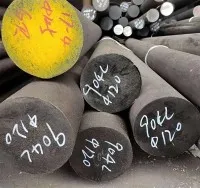

Pits and grooves of tube blanks The reasons for the pits and grooves in the tube blank: on the one hand, they may be caused by the crystallization process of the casting blank, which is related to the cone too large mold or uneven cooling of the secondary cooling zone. On the other hand, when the casting blank is not completely cooled, the surface of the tube blank is mechanically struck or scratched. Folds or scars (pits) and large outward folds (grooves) form on the surface of the capillary after piercing.
Ears of tube blanks: The roller gap (the tension leveling roll of the continuous casting machine or the roll of the rolling mill) is not closed. When the blank pipe is stretched or coiled, the tension leveling roll or roller is pressed too much or too little, causing too much flared metal to enter the roller gap. After perforation, the surface of the capillary produces an outward spiral fold. No matter what kind of surface defects of the tube blank, there may be defects on the surface of the steel tube in the rolling process, and the rolled steel tube will be scrapped in serious cases. Therefore, it is necessary to strictly control the surface quality of the blank tube and eliminate surface defects. Only tube blanks that meet the requirements can be processed. Low magnification structure defects of tube blanks Subcutaneous air bubbles of tube blank by visual inspection: The first reason is that the deoxidation of the molten steel is insufficient, and the gas content, especially hydrogen in the cast steel is the second reason.
This defect forms an irregular flying skin on the outer surface of the steel pipe after drilling or rolling, and the shape is similar to a nail; In severe cases, it will cover the outer surface of the steel pipe. Such defects are small and shallow and can be removed by grinding.
Subcutaneous cracks of tube blanks: The main reason is that the temperature of the surface layer of the continuous casting round blank changes repeatedly and undergoes multiple phase transformations. Generally, no defect occurs. If there is a defect, it will be a slight outward crease.
Intermediate cracks and center cracks of tube blanks: The intermediate crack and center crack of the continuous casting round tube blank are the main reasons for the inward folding of seamless steel tube. The causes of cracks are very complex, involving the effects of heat transfer, penetration and stress on billet solidification, which are generally controlled by the billet solidification process in the secondary cooling zone.
Porosity and shrinkage of tube blanks: They are caused by the effect of advanced grains in the solidification process of the casting blank; The movement of liquid metal is formed based on cooling to the direction of solidification and contraction is hindered. If the continuous casting round tube blank has porosity and shrinkage cavity, it does not have much influence on the quality of the capillary tube that is rolled and punched.
Microstructure Defects of Tube Blanks: Electron or High Magnification Microscope
When the composition and structure of the tube blank are uneven and serious segregation occurs, the rolled steel tube will show serious banding structure, which will affect the mechanical properties and corrosion properties of the steel tube, and will make your performance unsatisfactory. When the inclusion content of the blank tube is too much, it will not only affect the performance of the steel tube, but also may cause the steel tube to crack in the manufacturing process.
Factors: Harmful elements in steel, microstructure composition and segregation of the tube blank, and non-metallic inclusions in the tube blank.


