


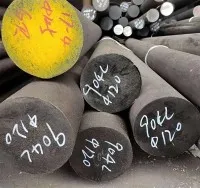


1. Normalization: Heat the steel or steel to the critical point AC3 or above the appropriate temperature for a certain period of time and then cool it in the air to obtain the heat treatment process of pearlite structure.
2. Annealing: heat treatment process in which the subconcentric steel workpiece is heated to 3-20 degrees above AC40, kept hot for a period of time, and then slowly cooled (or buried in sand or lime) with the oven at less than 500 degrees and cooled in air.
3. Solution heat treatment: The alloy is heated at a constant temperature in the single-phase high temperature zone, so that the leftover phase is completely dissolved in the solid solution and then quickly cooled to obtain the heat treatment process of the supersaturated solid solution.
4. Aging: The phenomenon that the properties of the alloy change with time when placed at room temperature or slightly higher than room temperature after solution heat treatment or cold plastic deformation.
5. Solution treatment: Completely dissolve various phases in the alloy, strengthen the solid solution and improve toughness and corrosion resistance, eliminate stress and softening, so as to continue processing and molding.
6. Aging treatment: heat and keep hot to the temperature of the enhanced phase precipitation, so that the enhanced phase precipitates and precipitates, hardens and improves strength.
7. Quenching: a heat treatment process in which the steel is austenitized and cooled at a suitable cooling rate to cause the workpiece to undergo unstable structural transformation, such as martensite, at all or in a certain range within of the cross section.
8. Quenching: Heat the quenched workpiece to a suitable temperature below the critical point AC1 for a certain period of time, and then cool it with a method that meets the requirements to obtain the required structure and performance of the treatment process thermal.
9. Carbonitriding of steel: Carbonitriding is the process of simultaneously infiltrating carbon and nitrogen into the surface layer of steel. Carbonitriding is commonly also known as cyanidation, and is widely used in medium temperature gas carbonitration and low temperature gas carbonitration (i.e., mild gas nitriding). The main purpose of medium temperature gas carbonitriding is to improve the hardness, wear resistance and fatigue resistance of steel. Low temperature gas carbonitration is mainly nitriding, and its main purpose is to improve the wear resistance and seizure resistance of steel.
10. Quenching and tempering: It is generally customary to call the heat treatment that combines quenching and tempering at high temperature called quenching and tempering treatment. Tempering is widely used in a variety of important structural parts, especially those connecting rods, bolts, gears and axles that work under alternating loads. After quenching and quenching treatment, the quenched cordite structure was obtained, and its mechanical properties were better than the normalized cordite structure of the same hardness. Its hardness depends on the high-temperature quenching temperature and is related to the quenching stability of the steel and the cross-sectional size of the workpiece, generally between HB200-350.

11. Brazing: A heat treatment process in which two workpieces are heated, melted, and joined with solder.
