


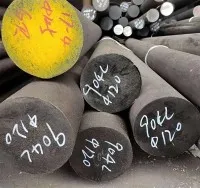


Stainless steel is a type of steel. Steel refers to steel that contains less than 2% carbon (C) and iron is more than 2%. The addition of chromium (Cr), nickel (Ni), manganese (Mn), silicon (Si), titanium (Ti), molybdenum (Mo) and other alloying elements in the casting process improves the properties of steel and makes it the steel is resistant to corrosion. (i.e. not rust) is the stainless steel we usually say.
What is the meaning of "steel" and "iron", what are the characteristics and what is the relationship between us, 304, 304L, 316, 316L, which we usually say, and what is the difference between them?
Steel: A material containing iron as the main element and having a carbon content of generally less than 2% and containing other elements. ——GB/T 13304-91 "Classification of steel"
Iron: a metallic element, atomic number 26. Iron materials have strong ferromagnetism and good plasticity and thermal conductivity.

Stainless steel: resistant to weak corrosive media such as air, steam, water or stainless steel. Commonly used steel grades are 304, 304L, 316 and 316L, which are 300 series austenitic stainless steels.
Why does stainless steel have different steel numbers?
In the stainless steel casting process, the amount of different alloys is different due to different types of alloying elements. The features are also different. To distinguish them, different grades of steel are crowned. Below are common decorative stainless steels. The table of contents of "alloy elements" of alloy steel is for reference only:
Chemical composition of different grades of steel (mass fraction, %)
| Steel number | carbon | silicon | manganese | match | sulfur | chrome | nickel |
|---|---|---|---|---|---|---|---|
| 304 | Less than or equal to 0,08 | Less than or equal to 1,00 | Less than or equal to 2,00 | Less than or equal to 0,045 | Less than or equal to 0,03 | 18-20 | 8-10 |
| 301 | Less than or equal to 0,15 | Less than or equal to 1,00 | Less than or equal to 2,00 | Less than or equal to 0,045 | Less than or equal to 0,03 | 16-18 | 6-8 |
| 202 | Less than or equal to 0,15 | Less than or equal to 1,00 | 7.5-10 | Less than or equal to 0,05 | Less than or equal to 0,03 | 17-19 | 4-6 |
| 201 | Less than or equal to 0,15 | Less than or equal to 1,00 | 5.5-7.5 | Less than or equal to 0,05 | Less than or equal to 0,03 | 16-18 |
3.5-5.5 |
304 Stainless Steel Introduction
| 304 stainless steel | 304 stainless steel is the most common grade of steel. As a widely used steel, it has good corrosion resistance, heat resistance, low temperature resistance and mechanical properties. It has good hot workability, such as stamping and bending, and has no heat treatment hardening phenomenon (non-magnetic, temperature is -196 degree C ~ 800 degree C). |
| Application: | |
|---|---|
| Household items (1, 2 types of tableware, cabinets, interior pipes, water heaters, boilers, bathtubs) | |
| Auto parts (wipers, mufflers, molded products) | |
| Medical devices, building materials, chemicals, food industry, agriculture, ship parts | |
Introduction to 304L stainless steel
| 304L stainless steel | As a 304 low carbon steel, its corrosion resistance is similar to that of 304 under normal conditions, but it is excellent in resistance to intergranular corrosion after welding or after stress relief; It can be maintained well without heat treatment. Corrosion resistance, use temperature -196 degree C ~ 800 degree C. |
| Application: | |
|---|---|
| It is used in outdoor field machines for chemical, coal and petroleum industries with high resistance to intergranular corrosion, heat-resistant parts for building materials and parts with difficult heat treatment. | |
