


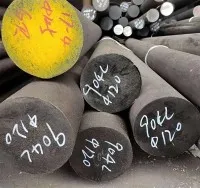


Standard 304/304L stainless steel
304 and 304L are the 2 most used stainless steels in daily life. From small kitchens and stoves to high-speed rail nuclear power, you can see the characters involved. So what is 304? 304 is actually a stainless steel grade of the American Society for Testing and Materials (abbreviated ASTM), a typical representative of austenitic stainless steel, "3" for the Cr-Ni system and "04" for the serial number. In the actual business process, users will sort according to different standards. Different standard brand naming rules are different. ASTM and JIS are represented by numbers, and GB and EN are named by ingredients.
Here are some common stainless steel ordering standards:
| steel standard | Application |
| ASTM A213 | Alloy steel tubes for boiler, superheater and heat exchanger |
| ASTM A269 | Boiler, heat exchanger, superheater and condenser |
| ASTM A312 | Used in pipelines to transport corrosive fluids |
| ASTM A240 | Stainless Steel Plate, Sheet and Strip for Pressure Vessels and General Applications |
Item content
There are also differences in the composition of 304 alternative grades in different standards. The GB standard is fully in accordance with the ASTM composition system. JIS component range is wider, the maximum C content is allowed to be 0.{{10}}8%, there is no clear requirement for N content and content minimum Cr is 18%. EN standard requires more specific S content, mechanical processing: S= 0.015% ~ 0.030%; welding: S= 0.008% ~ 0.030%; polished: S Less than or equal to 0.015%. These details must be noted in the order!
Stainless steel plate/sheet surface
In the order information, you need to write what type of surface you need. The common order surface for 304 is NO.1 (the hot rolled product is annealed and pickled, also called white roll), 2B (the cold rolled and pickled flat roll, matte), BA (cold rolled bright annealed roll , mirror), HL (hair plate), etc. There are also differences in the different standard surface types.

