


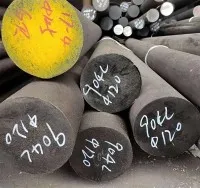


The main application areas for creep-resistant steels are power generation and petrochemical plants, which use all forms of product. Steam turbines require large forgings and castings, while pressure vessels, boilers and piping systems require tubes, pipes, plates and fittings. In addition to high creep strength, other material properties such as hardenability, corrosion resistance and weldability are also important. The relative importance of these properties depends on the specific application. For example, large turbine rotors require steels with good hardenability, while power plant tubes and pipes must have good weldability. Even so, the alloys used in these different applications employ the same mechanisms to improve creep resistance.
Molybdenum in solid solution reduces the creep rate of steel very effectively. Delays coagulation and thickening (Ostwald ripening) of carbides during high temperature service. The best results in terms of high temperature resistance are obtained by quenching and tempering to produce a microstructure made up of superior bainite.
Improving thermodynamic efficiency is the goal driving the development of power plant technology, and requires both improved plant designs and new steels with better properties to support those designs.
Creep-resistant ferritic steels continue to be the materials of choice for power plants, oil refineries and petrochemical plants around the world. They are classified as CMn steels, Mo steels, low alloy CrMo steels and 9-12%Cr steels. Due to the large number of different steel grades, Table 1 includes only a few typical representatives of each group.
| EN Designation | ASTM degree | Chemical composition (mass%) | ||||||
|---|---|---|---|---|---|---|---|---|
| c | Cr | Neither | mo | V | Nb | Others | ||
| CMn-steels | ||||||||
| P235 | TO | Max. 0.16 | Max. 0.30 | max. 0.30 | max. 0.08 | max. 0.30 Cu | ||
| P355 | max. 0.22 | {{0}}.015 –0.10 | ||||||
| Mo Steels | ||||||||
| 16Mo3 | {{0}}.12 –0.20 | {{0}}.25 –0.35 | ||||||
| 9NiCuMoNb5-6-4 | max. 0.17 | max. 0.30 | 1.00 –1.30 | {{0}}.25 –0.50 | {{0}}.015–0.045 | 0.50-0.80 Cu | ||
| CrMo Steels | ||||||||
| 13CrMo4-5 | T/P11 | {{0}}.10 –0.17 | 0.70 –1.10 | {{0}}.45 –0.65 | ||||
| 11CrMo9-10 | T/P22 | {{0}}.08 –0.15 | 2.00 –2.50 | 0.90 –1.20 | ||||
| 8CrMoNiNb9-10 | max. 0.10 | 2.00 –2.50 | {{0}}.30 –0.80 | 0.90 –1.10 | min. 10x%C | |||
| 7CrMoVTiB10-10 | T/P24 | {{0}}.05 –0.10 | 2.20 –2.60 | 0.90 –1.10 | {{0}}.20 –0.30 | 0.05-0.10 Ti 15-70 ppm B | ||
| T/P23 | {{0}}.04 –0.10 | 1.90 –2.60 | {{0}}.05 –0.30 | {{0}}.20 –0.30 | {{0}}.02 –0.08 | 1.45-1.75W | ||
| 9-12% Cr Steels | ||||||||
| X11CrMo9-1 | T/P9 | {{0}}.08 –0.15 | 8.0 –10.0 | 0.90–1.00 | ||||
| X20CrMoNiV11-1 | {{0}}.17 –0.23 | 10.0 –12.5 | {{0}}.30 –0.80 | 0.80 –1.20 | {{0}}.25 –0.35 | |||
| X10CrMoVNb9-1 | T/P91 | {{0}}.08 –0.12 | 8.00 –9.50 | max. 0.40 | 0.85 –1.05 | {{0}}.18 –0.25 | {{0}}.06 –0.10 | |
| X11CrMoWVNb9-1-1 | T/P911 | {{0}}.09 –0.13 | 8.50 –9.50 | {{0}}.10 –0.40 | 0.90 –1.10 | {{0}}.18 –0.25 | {{0}}.06 –0.10 | 0.90-1.10W |
| T/P92 | {{0}}.07 –0.13 | 8.50 –9.50 | max. 0.40 | {{0}}.30 –0.60 | {{0}}.15 –0.25 | {{0}}.04 –0.09 | 1.50-2.00 W | |
| T/P122 | {{0}}.07 –0.13 | 10.0 –12.5 | max. 0.50 | {{0}}.25 –0.60 | {{0}}.15 –0.30 | {{0}}.04 –0.10 | 0.30-1.70 Cu 1.50-2.50W | |


