


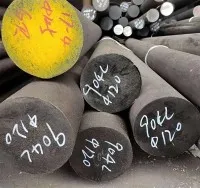


The finer grain structure of these steels results in higher strength compared to plain carbon steels. This finer grain is achieved by influencing the transformation temperatures so that the conversion of austenite to ferrite and pearlite occurs at a lower temperature during air cooling. At the low carbon levels typical of HSLA steels, elements such as silicon, copper, nickel and phosphorus are especially effective in producing fine pearlite.

The addition of chromium, copper and nickel produces a stable oxide layer that adheres to the base metal and is much less porous than the oxide layer that forms on ordinary structural steel. The result is a much lower corrosion rate that allows these steels to be used without coating.
The following table shows the difference in mechanical properties of ASTM A36 carbon structural steel and ASTM A588 Grade C high strength low alloy structural steel.

The difference in mechanical properties of ASTM A36 carbon structural steel and ASTM A588 grade C high-strength low-alloy structural steel
Degree | Yield resistance MPa (ksi) min | Tensile strength MPa (ksi) min | %Min elongation |
ASTM A36 | 250 (36) | 400 (58) | 23 |
ASTM A588 Gr C | 345 (50) | 485 (70) | 21 |


