

When choosing stainless steel for kitchenware, food processing, or industrial applications, understanding the differences between 18-8 and 18-10 stainless steel is essential. While both are austenitic stainless steels, subtle differences in composition affect corrosion resistance, durability, and performance.
what is 18/8 stainless steel?
18-8 stainless steel is a highly corrosion-resistant, durable, and non-magnetic (or weakly magnetic) austenitic alloy containing roughly 18% chromium and 8% nickel. Commonly identified as 304 grade stainless steel (or A2 stainless steel in metric), it is frequently used for kitchenware, cookware, food processing equipment, and fasteners due to its excellent hygiene and rust resistance.
What is 18/10 Stainless Steel?
18/10 stainless steel is primarily equivalent to AISI/SAE Type 304 (or sometimes 304L/304Cu), a high-quality austenitic stainless steel alloy containing 18% chromium and 10% nickel. It offers superior corrosion resistance, durability, and shine compared to 18/8 or 18/0, making it standard for premium cookware and cutlery.
Understanding 18-8 and 18-10 Stainless Steel
| Designation | Chromium (%) | Nickel (%) | Key Features |
|---|---|---|---|
| 18-8 Stainless Steel | 18% | 8% | Standard austenitic stainless steel, good corrosion resistance, widely used in cutlery and kitchen equipment |
| 18-10 Stainless Steel | 18% | 10% | Higher nickel content improves corrosion resistance, shine, and durability, preferred in premium kitchenware |
18-8 vs. 18-10 Stainless Steel: Chemical Composition
| Element | 18-8 (%) | 18-10 (%) | Note |
|---|---|---|---|
| Chromium (Cr) | 18 | 18 | Provides corrosion resistance |
| Nickel (Ni) | 8 | 10 | Higher Ni improves corrosion resistance & shine |
| Carbon (C) | ≤0.08 | ≤0.08 | Low carbon reduces carbide precipitation |
| Manganese (Mn) | ≤2 | ≤2 | Minor effect on strength |
| Phosphorus (P) | ≤0.045 | ≤0.045 | Trace elements |
| Sulfur (S) | ≤0.03 | ≤0.03 | Trace elements |
| Nitrogen (N) | ≤0.11 | ≤0.11 | Enhances corrosion resistance slightly |
18-8 vs. 18-10 Stainless Steel:Mechanical Properties
| Property | 18-8 Stainless Steel | 18-10 Stainless Steel |
|---|---|---|
| Tensile Strength | 505–750 MPa | 515–760 MPa |
| Yield Strength | 205–210 MPa | 205–215 MPa |
| Elongation | ≥40% | ≥40% |
| Hardness | 70–95 HRB | 70–95 HRB |
| Density | 7.93 g/cm³ | 7.93 g/cm³ |
| Max Service Temp | 870°C | 870°C |
Insight: The higher nickel content in 18-10 slightly enhances corrosion resistance and mechanical stability, especially in harsh or acidic environments.
18-8 vs. 18-10 Stainless Steel:Applications
| Application | 18-8 Stainless Steel | 18-10 Stainless Steel | Recommended Use |
|---|---|---|---|
| Cutlery & Flatware | ✅ | ✅ | 18-10 preferred for high-end products |
| Kitchen Equipment | ✅ | ✅ | Both suitable; 18-10 for acidic foods |
| Food Processing Equipment | ✅ | ✅ | 18-10 offers better long-term corrosion resistance |
| Industrial Piping & Tanks | ✅ | ✅ | Both acceptable, 18-10 for corrosive chemicals |
| Marine & Outdoor Equipment | ✅ | ✅ | 18-10 preferred for high chloride environments |
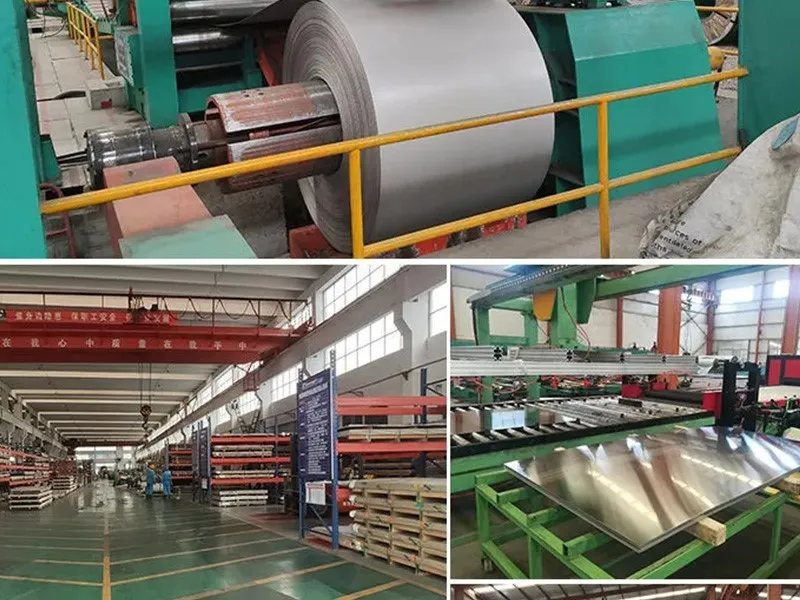
Why Choose Gnee Stainless Steel for 18-8 and 18-10 Products?
Gnee offers premium 18-8 and 18-10 stainless steel sheets, pipes, and products with:
ISO, SGS, and BV certified quality
Custom sizes and thicknesses for industrial or consumer applications
Surface finishing options: mirror, brushed, or satin
Fast delivery and technical support

FAQ
Q1: Is 18-10 stainless steel better than 18-8?
A: Yes, 18-10 has higher nickel content (10% vs 8%), which improves corrosion resistance, shine, and durability, making it ideal for premium applications.
Q2: Can 18-8 stainless steel rust?
A: While 18-8 has good corrosion resistance, prolonged exposure to acidic or salty environments may cause minor rusting. Proper cleaning and maintenance can prevent this.
Q3: Which grade is more cost-effective?
A: 18-8 stainless steel is slightly cheaper and sufficient for most kitchen, food, and industrial applications. 18-10 is worth the investment for high-end or corrosive environments.
Q4: Are both grades food-safe?
A: Yes, both 18-8 and 18-10 are safe for food contact and comply with international food-grade stainless steel standards.