What is 1.4301 stainless steel pipe?
1.4301 stainless steel pipe (also known as AISI 304 or X5CrNi18-10) is a versatile, austenitic, chromium-nickel alloy pipe widely used for its excellent corrosion resistance, formability, and weldability. It is highly sanitary and durable, making it ideal for food processing, chemical handling, and structural applications.
Is 1.4301 steel pipe the same as 304 pipe?
Yes, 1.4301 steel pipe is essentially the same as AISI 304 pipe. It is the standard European designation (EN/Werkstoff number) for 304 stainless steel. Both are austenitic, 18/8 (chromium-nickel) stainless steels with excellent corrosion resistance and weldability, making them interchangeable for most applications.
Which stainless steel material is equivalent to 1.4301 pipe?
The primary equivalent to 1.4301 (X5CrNi18-10) stainless steel pipe is AISI 304 (also known as UNS S30400). It is a versatile, 18/8 chromium-nickel austenitic stainless steel widely used for corrosion resistance. Other similar, though not always identical, designations include 304S15, 304S16, 304S31, and EN58E.
Chemical Composition of Stainless Steel 304 Hot Rolled Pipe
| Element | Content (%) |
|---|---|
| Chromium | 17.5 – 19.5 |
| Nickel | 8.0 – 10.5 |
| Carbon | ≤ 0.07 |
| Manganese | ≤ 2.0 |
| Silicon | ≤ 1.0 |
Mechanical Properties of Stainless Steel 304 Cold Rolled Pipe
| Property | Typical Value |
|---|---|
| Tensile Strength | ≥ 500 MPa |
| Yield Strength (0.2%) | ≥ 190 MPa |
| Elongation | ≥ 45% |
| Hardness (HRB) | ≤ 90 |
| Density | 7.9 g/cm³ |
| Melting Range | 1400–1450 °C |
Corrosion Resistance of 1.4301 Stainless Steel Pipe
1.4301 (AISI 304) stainless steel pipe offers excellent, versatile corrosion resistance in clean water, atmospheric, and many mild food/pharmaceutical environments, making it a standard choice for hygienic piping. It is highly resistant to rusting but is susceptible to pitting and crevice corrosion in chloride-heavy (marine) environments or high-temperature (>60°C) acidic conditions.
What is the hardness of 1.4301 stainless steel pipe ?
The hardness of 1.4301 (AISI 304) stainless steel pipe is typically< 215 HB (Brinell) or around 92 HRB (Rockwell B) in the annealedcondition. This austenitic grade features a tensile strength of 500- 700 MPa and excellent corrosion resistance, making it suitable forfood processing, chemical, and construction piping.
Is 1.4301 stainless steel pipe magnetic?
1.4301 (AISI 304) stainless steel pipe is generally non-magnetic in its annealed (softened) state because it is an austenitic alloy. However, it can become slightly or weakly magnetic after cold working, such as bending, drawing, or forming, which causes part of the structure to transform into martensite.
1.4301 stainless steel pipe Applications:
Food & Beverage: Dairy equipment, catering, and processing units.
Architectural: Handrails, decorative tubing, and structural frames.
Industrial: Chemical plant pipes, heat exchangers, and automotive exhaust systems.
Medical: Components for pharmaceutical and medical devices.
What is the difference between 1.4301 and AISI 304?
1.4301 and AISI 304 are essentially equivalent austenitic stainless steel grades that are frequently used interchangeably, both representing 18/8 stainless steel. The primary distinction between the two lies in their regional designation systems: 1.4301 adheres to the European EN standard (X5CrNi18-10), which imposes slightly stricter limits on carbon (≤0.07%) and sulfur (≤0.015%) content; conversely, AISI 304 falls under the U.S. standard, where the upper limits for carbon (≤0.08%) and sulfur (≤0.03%) content are typically slightly higher.
GNEE maintains deep collaborative partnerships with major steel mills-such as Baosteel, Tisco, and Tsingshan-to ensure the clear traceability of all raw materials. With over 15 years of export experience, we possess an intimate understanding of market standards across Southeast Asia, the Middle East, Europe, and the Americas. We offer comprehensive deep-processing services, including cutting, bending, punching, painting, and chamfering. We maintain a standing inventory of over 2,000 tons of 1.4301 stainless steel pipes year-round, covering a wide range of non-standard wall thicknesses and large-diameter specifications.
Inspection & Quality Control
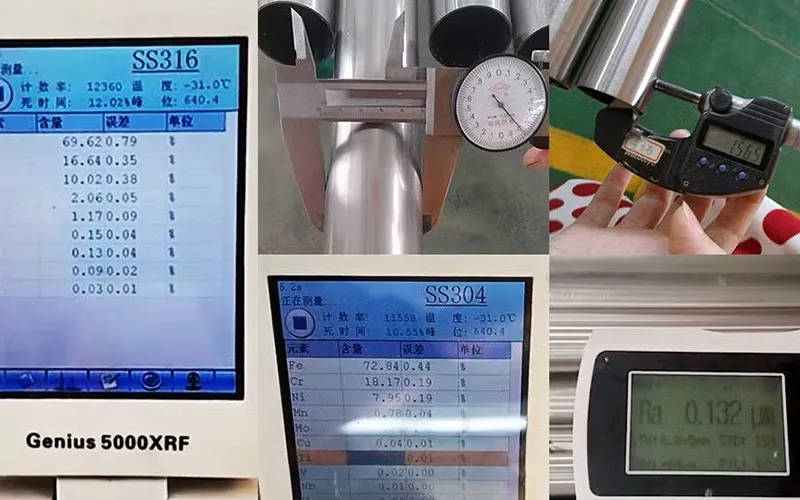
GNEE ensures that every 1.4301 stainless steel tube leaving our facility undergoes rigorous inspection:
Dimensional Inspection: Outer diameter, wall thickness, length, roundness, and straightness.
Spectrographic Analysis (PMI): 100% material verification to ensure chromium and nickel content meet specifications.
Mechanical Property Testing: Tensile tests, flattening tests, and flaring tests.
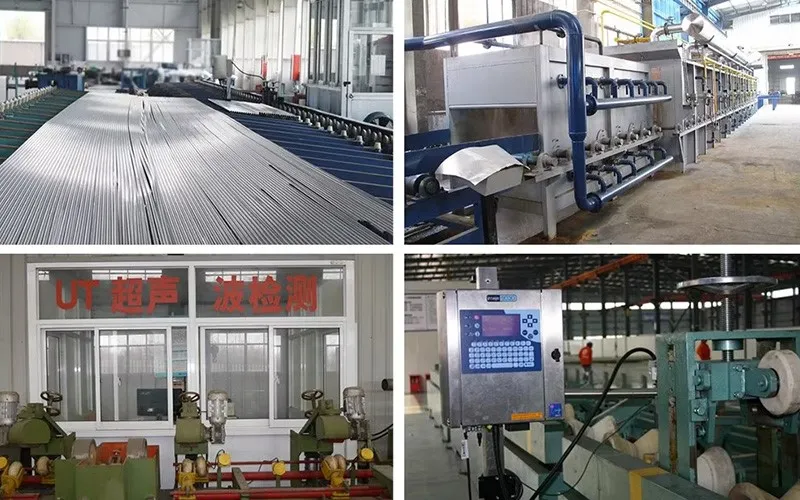
Non-Destructive Testing (NDT): Eddy current testing (ET), ultrasonic testing (UT), or hydrostatic testing (Hydro-test).
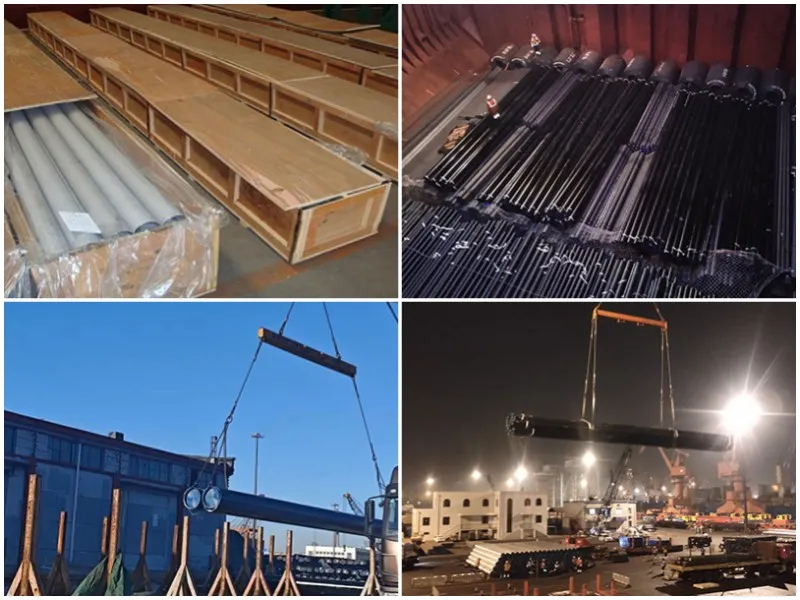
Third-Party Inspection: We accommodate on-site sampling and loading supervision by third-party agencies such as SGS, BV, TUV, and Intertek.
Packaging
For export shipments, GNEE provides multi-layered protective measures:
End Protection: Plastic caps are applied to both ends to prevent scratches to the tube openings and to keep out dust.
Surface Protection: Each individual tube is wrapped in a woven bag or enclosed in a PE sleeve.
Bundling Reinforcement: Bundles are secured with steel straps, utilizing corner protectors at the strapping points to prevent indentation.
Outer Packaging:
Small-diameter tubes: Fumigation-free wooden crates.
Large-diameter tubes: Secured via steel frames or pallets.
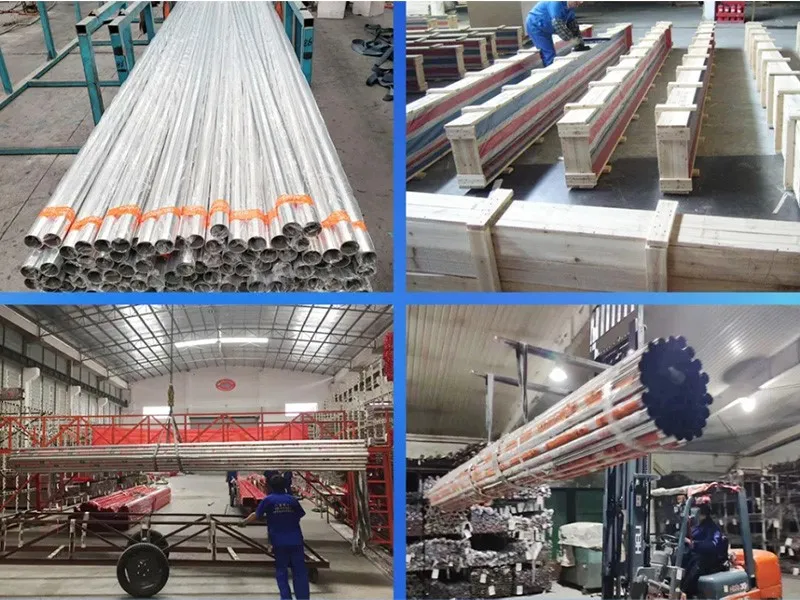
bundle packing with steel strips