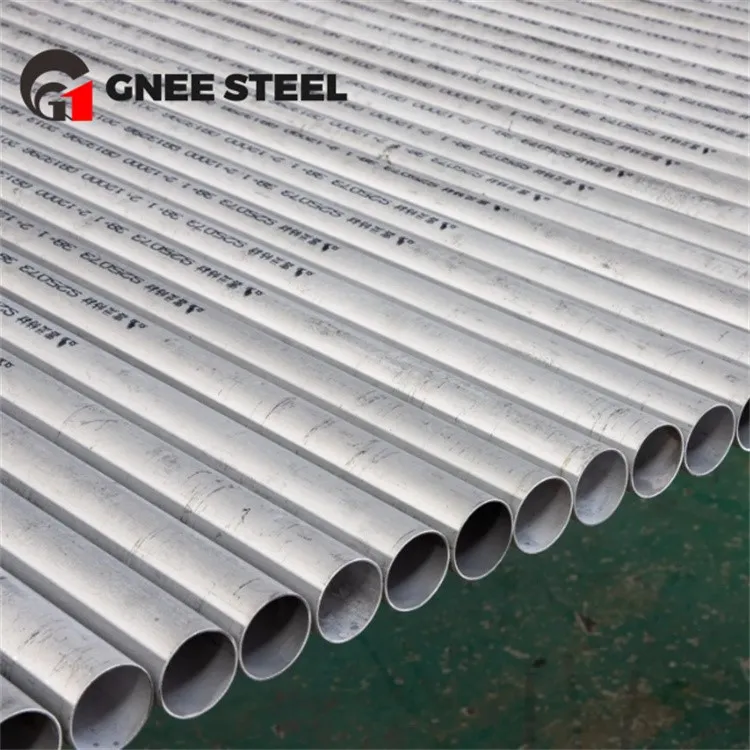
ASTM A268 TP446 is a high-chromium (23–30% content) ferritic stainless steel seamless tube, commonly designated as UNS S44600 or WNR 1.4762. This material is non-hardenable, highly durable, and frequently utilized in industrial applications such as heat exchangers, burner components, and furnace assemblies.
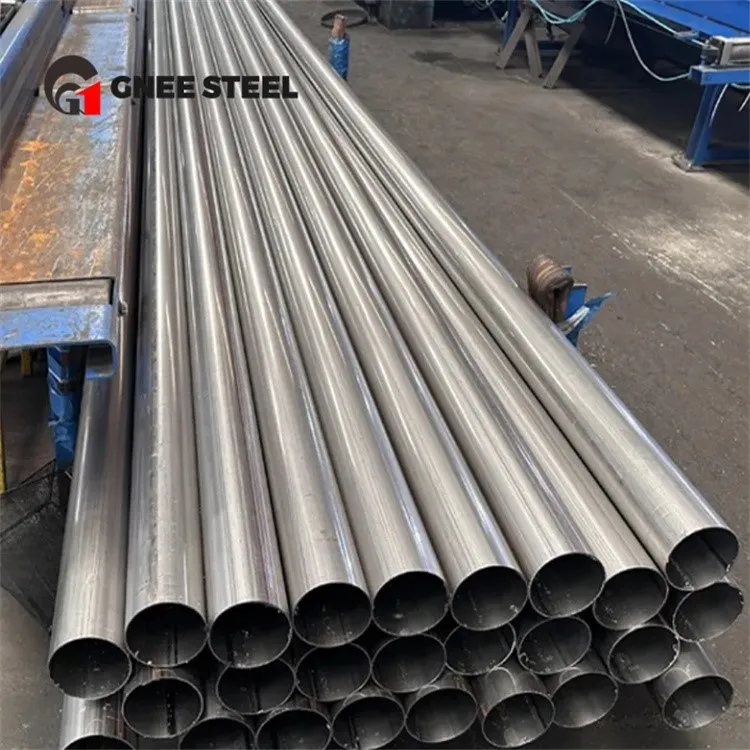
The ASTM A268 tubing we supply is manufactured using either seamless or welded processes, and no filler metal is permitted in its production. With a chromium content ranging from 23% to 27%, TP446 stainless steel tubes exhibit excellent oxidation resistance at temperatures reaching up to 1100°C (2000°F), without experiencing severe scaling.
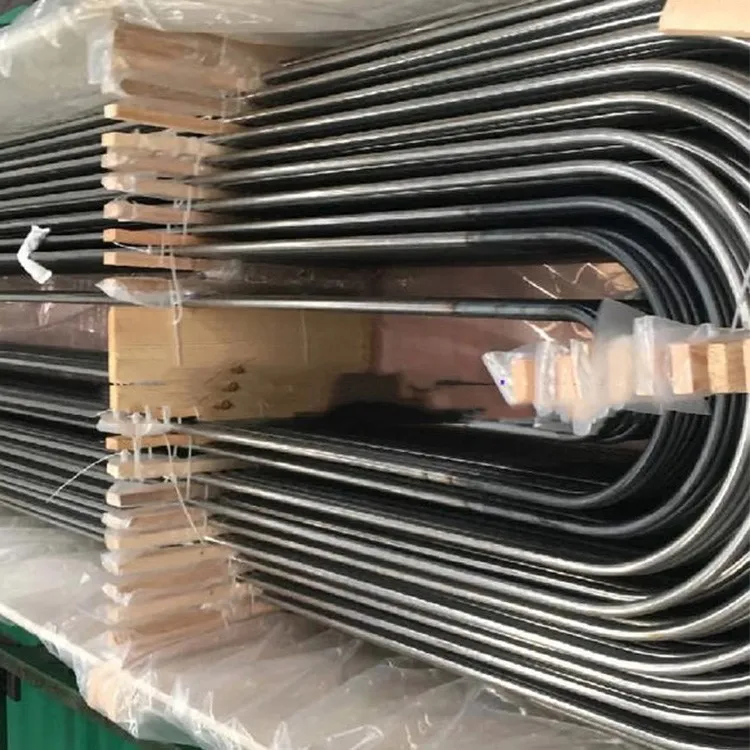
Specifically for our heat exchanger clients, we increase the expansion rate requirement for the Flaring Test on UNS S44600 seamless tubes by an additional 10% to 15%. Furthermore, we ensure that during the 90-degree Flattening Test, no visually detectable micro-cracks appear. We also strictly control the hardness to a range of 180–190 HBW. For UNS S44600 welded stainless steel tubes, the weld seam undergoes a cold rotary swaging process to eliminate stress concentration points within the weld's heat-affected zone, thereby ensuring that the seam does not become a point of failure during subsequent tube expansion or bending operations. For U-bent tubes, we provide induction heating annealing treatment in the bend radius area to relieve internal stresses induced by cold bending, thereby preventing the tubing from cracking due to stress release during the initial stages of high-temperature operation.
Chemical Composition of ASTM A268 TP446-1 (UNS S44600)
| Element | Symbol | Composition (wt. %) |
| Carbon | C | 0.20 max |
| Manganese | Mn | 1.50 max |
| Phosphorus | P | 0.040 max |
| Sulfur | S | 0.030 max |
| Silicon | Si | 1.00 max |
| Chromium | Cr | 23.0 – 27.0 |
| Nickel | Ni | 0.75 max |
| Nitrogen | N | 0.25 max |
SA268 TP446 Welded Tubes Mechanical Properties
| Grade | Yield Strength 0.2% Proof min (MPa)/td> | Tensile Strength min | Elongation (% in 50 milimeter) min | Hardness | |
| Rockwell B (HR B) max | Brinell (HB) max | ||||
| 446 | 275 | 485 | 20 | 92 | 201 |
UNS S44600 Heater Tubes Creep Properties
| 1% Elongation1) for | Rupture2) for | ||||
|---|---|---|---|---|---|
| Temperature °C | 1,000 h N/mm2 | 10,000 h N/mm2 | 1,000 h N/mm2 | 10,000 h N/mm2 | 100,000 h N/mm2 |
| 500 | 80 | 50 | 160 | 100 | 55 |
| 600 | 27.5 | 17.5 | 55 | 35 | 20 |
| 700 | 8.5 | 4.7 | 17 | 9.5 | 5 |
| 800 | 3.7 | 2.1 | 7.5 | 4.3 | 2.3 |
| 900 | 1.8 | 1.0 | 3.6 | 1.9 | 1.0 |
What is the maximum continuous service temperature for TP446?
The maximum safe service temperature for TP446 in an oxidizing atmosphere is 1100°C (2000°F).It exhibits excellent resistance to scaling at high temperatures. However, since its high-temperature strength (creep strength) is lower than that of austenitic steels, the mechanical loads on load-bearing components must be carefully considered during the design phase.
How are TP446 stainless steel tubes welded?
The primary challenge when welding TP446 is grain coarsening within the Heat-Affected Zone (HAZ), which can render the weld extremely brittle. It is recommended to preheat the material to between 150°C and 200°C. Typically, 310 welding electrodes or nickel-based alloys (such as Inconel 600/625) are used to enhance weld toughness and compensate for the inherent brittleness of the base metal.
Flattening Test: Ensures that the tubing does not crack when subjected to compression.
Flaring Test: Ensures that the tubing possesses sufficient ductility when expanded into a tube sheet.
Eddy Current Testing (ET): Detects minute surface and near-surface cracks.
Ultrasonic Testing (UT): Targets thick-walled tubing to detect internal defects.
Hydrostatic Test: Each tube is held under pressure for at least 5 seconds to ensure leak-tightness.
Packaging
Tube Marking: Clearly printed standards, grade, dimensions, and Heat Number.
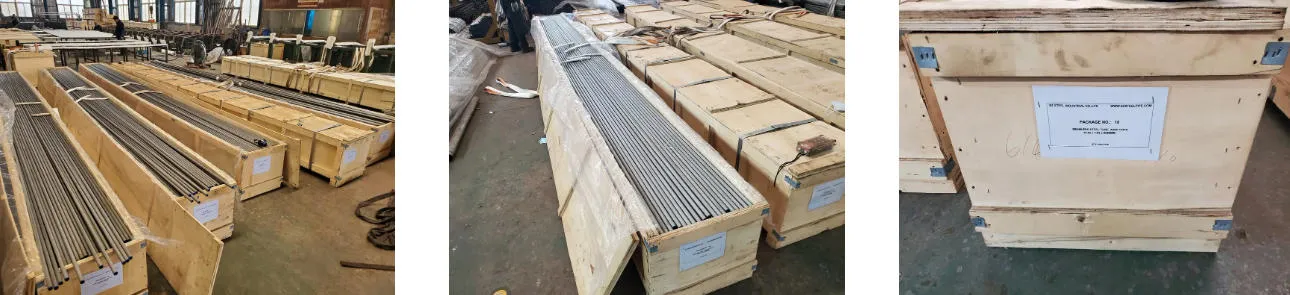
Packaging utilizes ISPM 15-compliant plywood crates (fumigation-free) or fumigated solid wood crates. The base of each crate is fitted with 10 cm-high skids to facilitate forklift handling.