what is 304 stainless steel sheet for kitchens?
304 stainless steel sheets are the industry standard for commercial and residential kitchens due to their superior corrosion resistance, hygiene, and durability. Composed of 18% chromium and 8% nickel, this grade is non-magnetic, heat resistant, and impervious to acids found in foods like citrus and vinegar, ensuring it does not react with ingredients or leach harmful substances.
304 stainless steel sheet for kitchens supplier
GNEE supplies 304 stainless steel sheets specially designed for kitchen applications, manufactured in strict accordance with ASTM A240 and EN 10088-2 standards. The material features a stable chemical composition, with a chromium content of 18.5%–19.5%, nickel content of 8.5%–10.0%, and carbon content ≤0.07%. It offers excellent corrosion resistance in humid kitchen environments, effectively resisting water, oil, salt, and food acids.
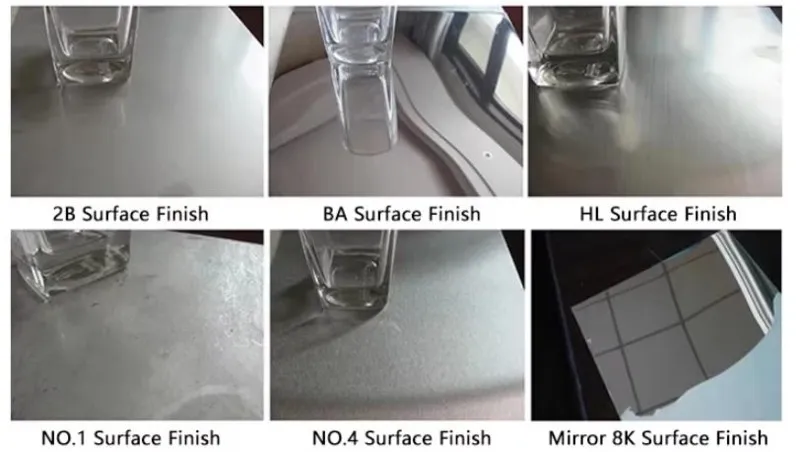
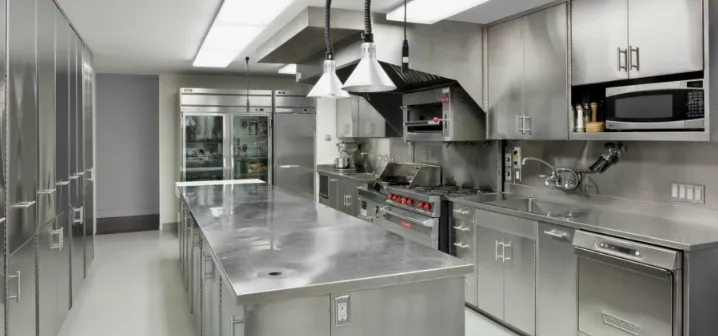
The 304 stainless steel sheets have a tensile strength ≥515 MPa, yield strength ≥205 MPa, and elongation ≥40%, providing excellent formability, bendability, and weldability. They are ideal for manufacturing countertops, sinks, cabinets, backsplashes, and range hoods. Surface finishes include 2B, BA, No.4, brushed, and embossed, with surface roughness (Ra) controlled within 0.6–0.8 μm, making them easy to clean, fingerprint-resistant, and hygienic for long-term use.
The thickness range of our 304 stainless steel sheets for kitchen equipment is from 0.3 mm to 6.0 mm, with widths of 1000–1500 mm and lengths of 2000–3000 mm. We also provide customized services such as cutting, slitting, and polishing.
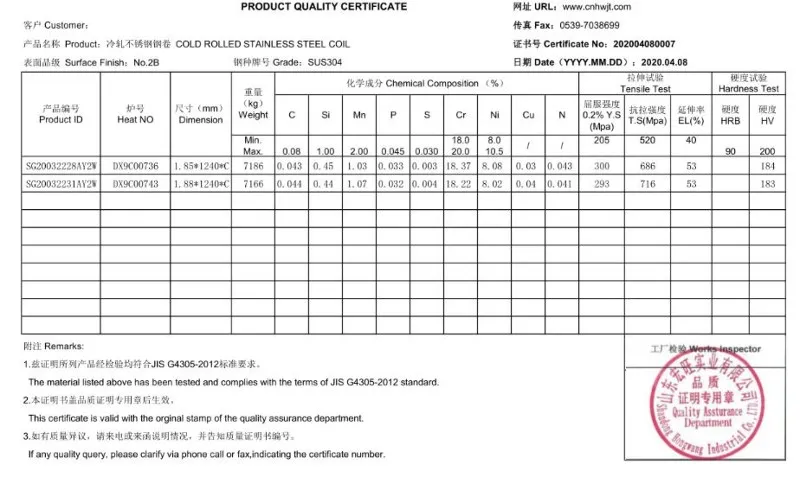
Each sheet undergoes strict testing for hardness, flatness, and surface quality, and is supplied with a complete mill test certificate, ensuring food safety, durability, and aesthetic reliability for both commercial and residential kitchen projects.
304 stainless steel sheet specifications
| Item | Specification |
|---|---|
| Material Grade | AISI 304 / SUS 304 / UNS S30400 |
| Standard | ASTM A240 / EN 10088-2 |
| Type | Austenitic Stainless Steel |
| Common Applications | Countertops, Sinks, Range Hoods, Wall Cladding |
| Thickness (Gauge) | 16 Gauge (1.5 mm), 18 Gauge (1.2 mm), 20 Gauge (1.0 mm) |
| Standard Widths | 1000 mm, 1219 mm (4 ft), 1500 mm |
| Standard Lengths | 2000 mm, 2438 mm (8 ft), 3000 mm |
| Edge Treatment | Square Edge, Beveled Edge, or Bullnose (for countertops) |
Chemical Composition ASTM A240
| Element | Symbol | Content (%) |
| Chromium | Cr | 18.0 - 20.0 |
| Nickel | Ni | 8.0 - 10.5 |
| Carbon | C | 0.08 Max |
| Manganese | Mn | 2.0 Max |
| Silicon | Si | 0.75 Max |
| Phosphorus | P | 0.045 Max |
| Sulfur | S | 0.03 Max |
| Iron | Fe | Balance |
Mechanical Properties
| Feature | Value |
| Tensile Strength | ≥ 515 MPa |
| Yield Strength (0.2% Offset) | ≥ 205 MPa |
| Elongation (in 50mm) | ≥ 40 % |
| Hardness (Rockwell B) | ≤ 92 HRB |
| Density | 7.93 g/cm³ |
Surface Finishes for Kitchens
| Finish Code | Name | Description | Kitchen Use |
| No. 4 | Brushed / Satin | Fine grit lines, directional polish | Most Common (Countertops, Fridges) |
| HL | Hairline | Long, continuous polishing lines | Decorative wall panels, Elevator interiors |
| 2B | Cold Rolled | Smooth, slightly reflective, greyish | Hidden parts or structural frames |
| BA | Bright Annealed | Mirror-like, highly reflective | Backsplashes, decorative trim |
| No. 8 | Mirror | True mirror finish | High-end decorative accents |
What is the difference between SS 304 No.4 Finish and Hairline (HL)?
No. 4 Finish (Brushed): Short, discontinuous brushed lines. Recommended for commercial kitchens as it best conceals scratches and fingerprints.
Hairline (HL): Long, continuous fine lines. Visually more sophisticated and refined, often used in high-end residential kitchens or hotel lobbies.
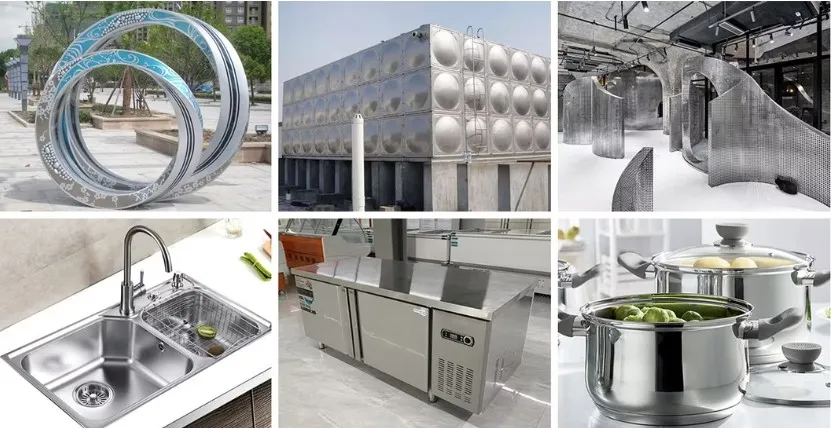
Key Usage Examples in Kitchens:
Countertops and Worktops: Durable, heat-resistant, and non-porous surface.
Splashbacks/Backsplashes: Protects walls from steam and grease.
Commercial Kitchen Equipment: Used for prep tables, shelving, and commercial sinks.
Kitchen Appliances: Commonly found on refrigerators, dishwashers, and range hoods.
Why is 304 stainless steel superior to 201 stainless steel in kitchen applications?
The key difference lies in the chemical composition. 304 contains approximately 18% chromium and 8% nickel, while 201 has very low nickel content (approximately 1%), which is replaced by manganese.
How to clean 304 stainless steel?
Use warm water, neutral detergent, and a soft microfiber cloth. Wipe in the direction of the grain. Never use steel wool, as it will scratch the surface and leave iron filings that can cause rust; do not use chemicals containing chlorine bleach.
Our Client Cases
Project Background: A central factory for a large fast-food brand, involving automated cleaning and large-scale cutting.
Applications: Wall Cladding: Full-coverage 304 stainless steel wall cladding, approximately 20 Gauge (0.9mm) thick, and conveyor guards.
Highlights:
Ease of Cleaning: Large-size panels (e.g., 1219x3000mm) minimize seams.
Edge Folding: All panel edges feature a Safety Edge to prevent injury to cleaning personnel.
High Temperature Resistance: In areas near large ovens, 304 stainless steel can withstand temperature fluctuations up to 800°C without deformation.
Leveraging over 18 years of deep expertise in the stainless steel industry, GNEE possesses an intimate understanding of various international quality standards (such as ASTM and EN) and is fully proficient in handling all necessary documentation required for smooth customs clearance (including MTRs, COOs, and Form Es). We boast an extensive and successful track record in supplying food-grade stainless steel materials for commercial kitchen projects across Southeast Asia, the Middle East, and Europe.
Lead Time: We maintain a readily available stock of standard 4x8 sheets, enabling us to ship orders within 7 days. For products requiring custom surface finishes or special dimensions, our standard lead time is 15 days.
Packaging - Seaworthy & Protective
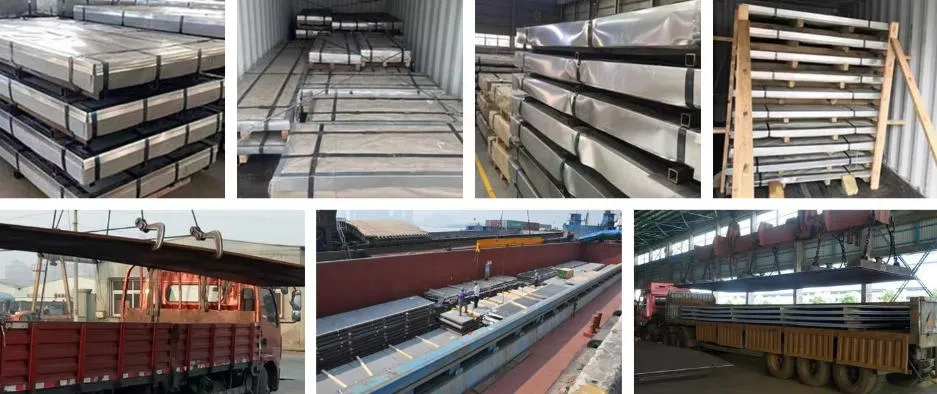
Our 304 kitchen sheets are packed in seaworthy export packaging. Each sheet is protected by a 100-micron laser film to ensure a scratch-free surface. We use fumigated wooden pallets with edge protection and waterproof wrapping, reinforced with steel straps for maximum safety during sea transit.
Bracing: Wooden beams are utilized to reinforce the load and prevent shifting during transit. The 20-foot General Purpose (20GP) container is the most commonly used vessel type for exporting stainless steel sheets (typically subject to a weight limit of 25–28 tons).