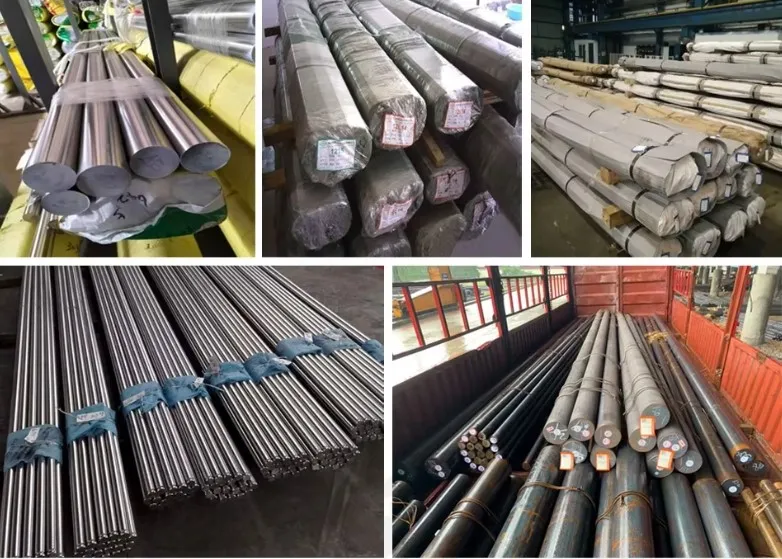
What is 1.4301 material?
1.4301 is an austenitic stainless steel, also known as AISI 304 or X5CrNi18-10, widely used for its excellent corrosion resistance, good weldability, and formability. It is a common, all-purpose stainless steel used in a vast range of applications, from household appliances and sinks to chemical equipment and decorative structures.
What material is 1.4057 equivalent to?
1.4057 is a martensitic stainless steel grade, also known as AISI 431 or X17CrNi16-2. It is heat-treatable and offers high strength and good corrosion resistance, making it suitable for applications like marine and aircraft components, shafts, and fasteners. Its properties include good tensile and torsional strength, but its machinability is poor, and its weldability is limited.
What is the difference between 1.4301 and 1.4057?
1.4057 is a martensitic stainless steel (also known as AISI 431), which is typically processed in a "+QT" (quenched and tempered) state to obtain high hardness and strength; while 1.4301 is an austenitic stainless steel (also known as AISI 304), which is more commonly used in applications where corrosion resistance is the primary consideration.
1.4301 vs 1.4057 Stainless Steel: Chemical Composition Comparison
| Grade | C (%) | Cr (%) | Ni (%) | Mn (%) | Si (%) | Mo (%) | Other Elements | Material Type |
|---|---|---|---|---|---|---|---|---|
| 1.4301 (304) | ≤0.07 | 17.5–19.5 | 8–10.5 | ≤2.0 | ≤1.0 | – | N ≤0.10 | Austenitic SS |
| 1.4057 (431) | 0.12–0.22 | 15–17 | ≤2.0 | ≤1.0 | ≤1.0 | – | – | Martensitic SS |
1.4301 vs 1.4057 Stainless Steel: Mechanical Properties Comparison
| Property | 1.4301 (304) Annealed | 1.4057 (431) Annealed | 1.4057 (431) Hardened & Tempered |
|---|---|---|---|
| Tensile Strength (MPa) | 500–750 | 680–880 | 1000–1200 |
| Yield Strength (MPa) | ≥210 | ≥450 | ≥700 |
| Hardness (HB/HRC) | 150–180 HB | 200–240 HB | 40–48 HRC |
| Elongation (%) | ≥45 | 12–20 | 8–12 |
| Corrosion Resistance | High | Medium | Medium–Low |
| Magnetism | Non-magnetic | Magnetic | Magnetic |
1.4301 vs. 1.4057: Corrosion resistance
1.4301 (austenitic 304) has superior general corrosion resistance compared to 1.4057 (martensitic 431), especially in broad environmental conditions. 1.4057 is better suited for applications requiring high strength and hardness, while 1.4301 is the better choice for a wider range of corrosive environments.
1.4301 vs. 1.4057: Hardness
1.4057 stainless steel is significantly harder than 1.4301 stainless steel, especially after heat treatment. 1.4301 typically has a maximum Brinell hardness of 215 HB, while 1.4057 can achieve a Brinell hardness of 251-299 HB or even 284-331 HB after different heat treatments, and can reach 33-46 HRC (Rockwell Hardness).
What is the difference between 1.4301 and 1.4307 stainless steel?
In summary, EN 1.4301 (AISI 304) is generally preferred when higher mechanical strength and wear resistance are required, while EN 1.4307 (AISI 304L) is a better choice for applications involving extensive welding or exposure to corrosive environments. The final choice depends on the specific needs of the application.
1.4057 round bar price per kg
Current market price (may vary by size, quantity, and QT condition):
1.4057 QT800 round bar: USD 2.80 – 3.60 / kg
Machined shafts / custom parts: quoted per drawing
Price increases with tighter tolerances, roughness requirements, and large diameters.
Gnee provides competitive factory-direct pricing with MTC, SGS, BV, and ISO certificates.