

When industrial projects require both high mechanical strength and reliable corrosion resistance, duplex stainless steel 2205 serves as a practical alternative to conventional austenitic stainless steels, such as grade 316L.
Characterized by a dual-phase (ferritic-austenitic) microstructure and high strength, duplex stainless steel 2205 offers excellent resistance to pitting, crevice corrosion, and chloride-induced stress corrosion cracking. It is widely used in sectors including oil and gas processing, chemical storage, offshore engineering, pulp and paper production, pressure vessels, and industrial piping.
What Is Duplex Steel 2205?
Duplex 2205 is a nitrogen-alloyed duplex stainless steel containing approximately 22% chromium, 5–6% nickel, 3% molybdenum, and nitrogen. Its microstructure combines ferrite and austenite, typically in roughly balanced proportions. This two-phase structure provides higher strength than common austenitic grades while maintaining good corrosion resistance.
The grade is commonly identified by the following designations:
- UNS S32205: the commonly specified 2205 grade with tighter compositional requirements than the original S31803 designation in relevant specifications.
- UNS S31803: an earlier designation associated with the 2205 family; verify the actual chemistry and purchase specification.
- EN 1.4462: the European material number.
- Common name: Duplex 2205 or 22Cr duplex stainless steel.
What Is Duplex Steel 2205 Used For?
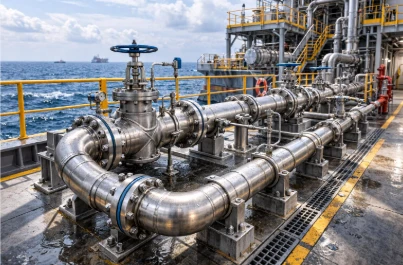
1. Oil and gas industry
Duplex 2205 is used for process piping, manifolds, flanges, valves, and selected pressure-containing components exposed to corrosive production fluids. Its high strength can help engineers reduce section thickness where design codes and loading calculations permit. For sour-service environments, confirm the applicable NACE/ISO requirements and the actual service conditions before specifying the material.
2. Marine engineering and water treatment
2205 is suitable for selected seawater-handling equipment, marine structures, pumps, and water-treatment piping where chloride corrosion is a concern. Suitability depends on chloride concentration, temperature, flow conditions, deposits, and crevice design. It should not automatically be treated as suitable for every seawater or high-pressure reverse-osmosis application.
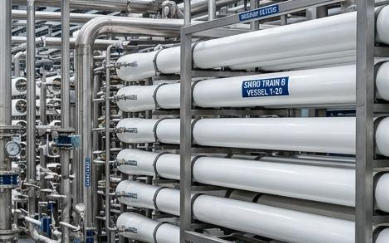
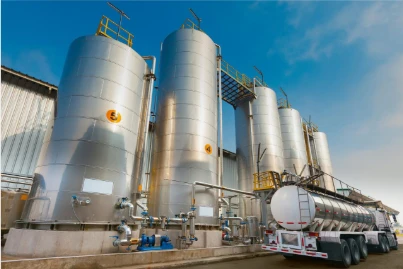
3. Chemical processing and storage
Duplex 2205 is used in selected chemical storage tanks, tanker cargo systems, process vessels, and transfer lines. Its corrosion resistance can be beneficial in chloride-containing or otherwise aggressive process environments, but compatibility must be checked against the specific chemical, concentration, temperature, and exposure time.
4. Pulp and paper manufacturing
2205 is used for selected digesters, process tanks, piping, and other equipment exposed to corrosive process liquors. Material selection should account for the actual chemical composition and process temperature rather than relying on the industry name alone.
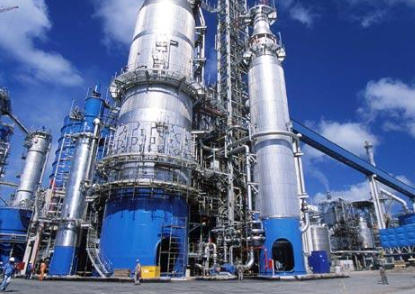
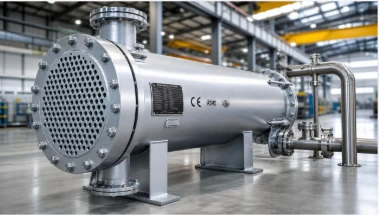
5. Heat exchangers and pressure equipment
Duplex 2205 can be specified for pressure vessels, selected heat-exchanger components, and industrial equipment where mechanical strength and corrosion resistance are both important. The correct product form, design code, wall thickness, temperature limits, and corrosion allowance must be confirmed by the equipment designer.
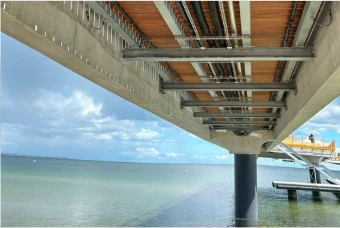
6. Structural and infrastructure projects
2205 may be used in bridge components, load-bearing structures, and other demanding infrastructure applications. Its higher yield strength can support material-saving designs, subject to engineering calculations, fabrication requirements, and applicable structural codes.
Duplex 2205 Chemical Composition
|
Element |
Typical specification range or limit (wt.%) |
|---|---|
|
Chromium (Cr) |
22.0–23.0% |
|
Nickel (Ni) |
4.5–6.5% |
|
Molybdenum (Mo) |
3.0–3.5% |
|
Nitrogen (N) |
0.14–0.20% |
|
Carbon (C) |
≤ 0.030% |
|
Manganese (Mn) |
≤ 2.00% |
|
Silicon (Si) |
≤ 1.00% |
|
Phosphorus (P) |
≤ 0.030% |
|
Sulfur (S) |
≤ 0.020% |
|
Iron (Fe) |
Balance |
Duplex 2205 Mechanical and physical properties
The following values are representative reference values for duplex 2205; minimum requirements and test conditions vary by product form and standard.
|
Property |
Representative value |
|---|---|
|
Tensile strength |
≥ 655 MPa for common S32205 plate specifications |
|
0.2% proof / yield strength |
≥ 450 MPa for common S32205 plate specifications |
|
Elongation |
≥ 25% for common plate specifications |
|
Brinell hardness |
Often limited to ≤ 290 HBW for common plate specifications |
|
Microstructure |
Ferrite + austenite |
|
Density |
Approximately 7.8 g/cm³ |
|
Magnetic response |
Generally magnetic |
These mechanical values are not a substitute for the applicable ASTM requirements. For example, ASTM A240 plate, ASTM A790 pipe, and ASTM A182 forgings have separate product-specific requirements. Always use the standard applicable to the ordered form.
Duplex 2205 Stainless Steel Supplier
Duplex 2205 is available in multiple product forms. The appropriate ASTM specification depends on whether the buyer needs flat products, piping, bar stock, or forged components.
|
Product form |
Common specification |
Typical applications |
|---|---|---|
|
Plate, sheet and strip |
ASTM A240 / ASME SA-240 |
Pressure vessels, tanks, chemical equipment, structural components |
|
Seamless and welded pipe |
ASTM A790 / ASME SA-790 |
Process piping, offshore systems, corrosive-fluid transport |
|
Seamless and welded tube |
ASTM A789 / ASME SA-789 |
Heat exchangers and general-service tubing |
|
Bar and shapes |
ASTM A276 / ASTM A479 |
Shafts, machined parts, industrial components |
|
Forged flanges and fittings |
ASTM A182, with grade confirmed |
Piping systems and pressure components |
|
Wrought butt-welding fittings |
ASTM A815 |
Elbows, tees, reducers and other piping fittings |

FAQ
Is Duplex 2205 (duplex stainless steel) better than 316L stainless steel?
Duplex 2205 (UNS S32205) typically has a yield strength of approximately 450 MPa-1.5 to 2 times that of 316L (roughly 170–300 MPa)-and offers superior resistance to chloride-induced stress corrosion cracking. However, 316L benefits from well-established forming and welding practices, as well as generally lower overall costs. The choice between the two should be based on the specific corrosive medium, design pressure, and fabrication requirements.
Is Duplex 2205 suitable for seawater environments?
Duplex 2205 exhibits good resistance to chloride corrosion, making it suitable for certain seawater cooling systems, marine structural components, and brine-handling equipment. Nevertheless, it remains susceptible to pitting and crevice corrosion when exposed to conditions involving continuous immersion, crevices, deposits, or high-temperature seawater. For more demanding marine applications, one should consider highly corrosion-resistant materials, such as super duplex stainless steel 2507 (UNS S32750).
What is the difference between S31803 and S32205?
Both S31803 and S32205 are classified as 2205 duplex stainless steels; the primary difference lies in their minimum chemical composition requirements. For S31803, the minimum values for Cr, Mo, and N are 21%, 2.5%, and 0.08%, respectively, whereas for S32205, these values are 22%, 3.0%, and 0.14%. S32205 is subject to stricter compositional controls, which generally provide more consistent resistance to pitting corrosion. When procuring these materials, it is essential to verify compliance with ASTM standards and review the material test certificates.
Can Duplex 2205 be welded?
Duplex 2205 is weldable; common welding processes include GTAW (TIG), GMAW (MIG), and SMAW (shielded metal arc welding), typically using ER2209 or E2209 filler materials. During welding, it is essential to control heat input and interpass temperature, and to establish a qualified welding procedure in accordance with applicable standards. This helps prevent an imbalance in the ferrite-to-austenite ratio and the precipitation of detrimental intermetallic phases, thereby ensuring the strength and corrosion resistance of the welded joint.
Is Duplex 2205 magnetic?
Duplex 2205 is magnetic because its annealed microstructure typically consists of approximately 50% ferrite and 50% austenite, with the ferrite phase being ferromagnetic. Consequently, Duplex 2205 can be attracted to a magnet-unlike 316L, which is generally non-magnetic. However, the degree of magnetism can be influenced by the material's processing state, the specific ratio of its microstructural phases, and the effects of welding; therefore, a simple magnet test is not a reliable method for identifying the material grade.