SUS304 and SUS316: Food-grade stainless steel
Both SUS304 and SUS316 are excellent food-grade stainless steels, but SUS304 (18/8) is the industry standard for general use due to its balance of durability, hygiene, and cost, while SUS316 offers superior corrosion resistance from molybdenum, making it ideal for harsh, salty, acidic, or chemically aggressive food environments like seafood processing or high-salinity brewing.

what is SUS304 Food-Grade Stainless Steel?
SUS304 is a popular, food-grade stainless steel (also known as 18/8) containing 18% chromium and 8% nickel, valued for its excellent corrosion resistance, durability, and ease of sanitization, making it a safe and standard choice for kitchenware, food processing equipment, sinks, and storage tanks as it doesn't leach harmful substances into food.
what is SUS316 Food-Grade Stainless Steel?
SUS316 Food-Grade Stainless Steel (also known as AISI 316) is a high-quality austenitic alloy with added molybdenum, providing superior resistance to corrosion from chlorides, acids, and harsh cleaners, making it ideal for food processing equipment handling salty, acidic, or high-temperature products, ensuring hygiene, preventing contamination, and offering durability for stringent cleaning requirements.

SUS304 VS. SUS316 food-grade Stainless Steel

What is 18/10 stainless steel food grade?
18/10 stainless steel is a high-quality, food-grade alloy with 18% chromium and 10% nickel, making it highly resistant to rust and corrosion, non-reactive with foods (even acidic ones), durable, and shiny, ideal for premium cutlery, cookware, and medical tools because its high nickel content provides superior corrosion resistance and aesthetics.
What is better, 304 or 316 stainless steel for food?
For food applications, 304 stainless steel is generally sufficient and cost-effective for most uses, while 316 is better for harsh, salty, or highly acidic conditions due to its molybdenum content, offering superior corrosion resistance but at a higher price. Choose 304 for general kitchenware, prep tables, and storage; opt for 316 for brewing, dairy, marine, or anything with high salt/acid exposure to prevent pitting and crevice corrosion.
Is SUS316 safe for food?
Both 304 and 316 stainless steels are classified as food-grade and meet regulatory standards for direct contact with food, including FDA regulations, EU Framework Regulation (EC) No 1935/2004, and NSF/ANSI 51 certification.
Side-by-Side Property Comparison
| Property | 304 SS | 316 SS |
|---|---|---|
| Max. Operating Temperature | ~870 °C | ~800 °C |
| SCC Resistance | Moderate | High |
| Weldability | Excellent | Excellent |
Both 304 and 316 stainless steel are ideal choices for food processing applications, being safe and durable. The choice between the two grades depends on the specific application environment, particularly factors such as chemical contact, chloride content, hygiene requirements, and budget.
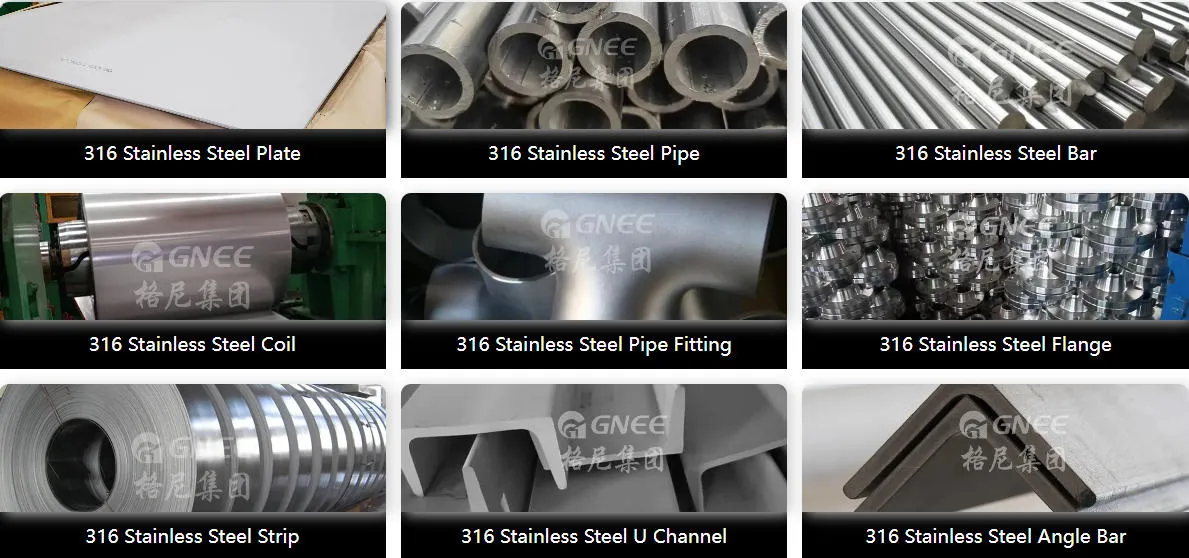
If you have project requirements for 316 or 304 food-grade stainless steel, we welcome your order. GNEE has a large inventory of popular products for you to choose from. It can be processed into various practical product forms, including plates, coils, tubes, bars, and wires. For detailed chemical composition information and free samples, please contact our factory immediately. We offer competitive prices and excellent service.