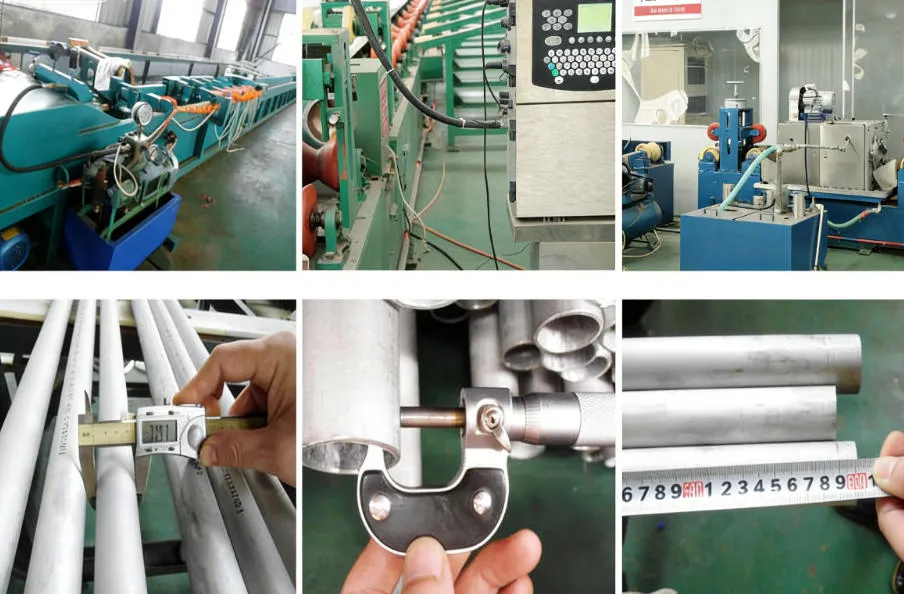
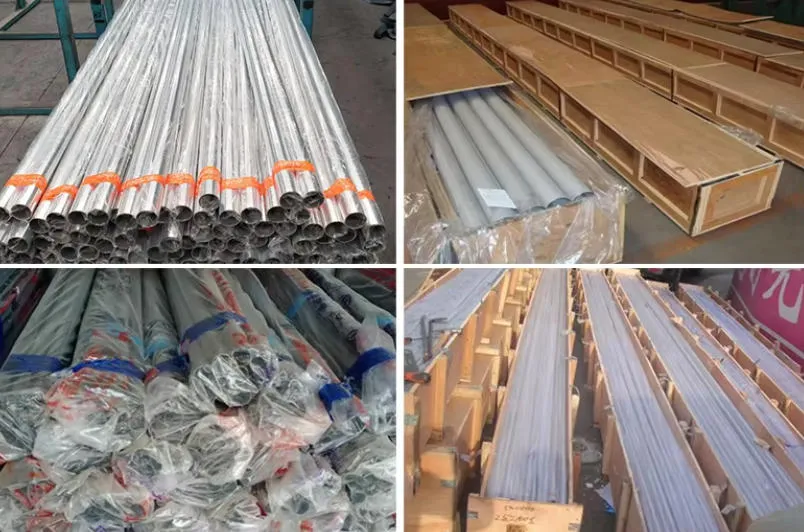
Why do traditional stainless steel pipes often suffer from reduced strength, scale spalling, or even premature failure under conditions involving high-temperature oxidation and cyclic thermal loads? The critical factors lie in the stability of the material's grain structure and whether its manufacturing precision truly meets the rigorous demands of high-end applications.
Our ASTM A312 253MA Stainless Steel Seamless Pipes achieve enhanced solid-solution strengthening and superior oxidation resistance through the addition of elevated levels of nitrogen (N ≈ 0.14–0.20%) and rare earth elements. This not only significantly boosts high-temperature strength but also improves creep resistance, allowing the pipes to maintain exceptional structural stability and oxidation resistance within temperature ranges of approximately 900–1100°C.
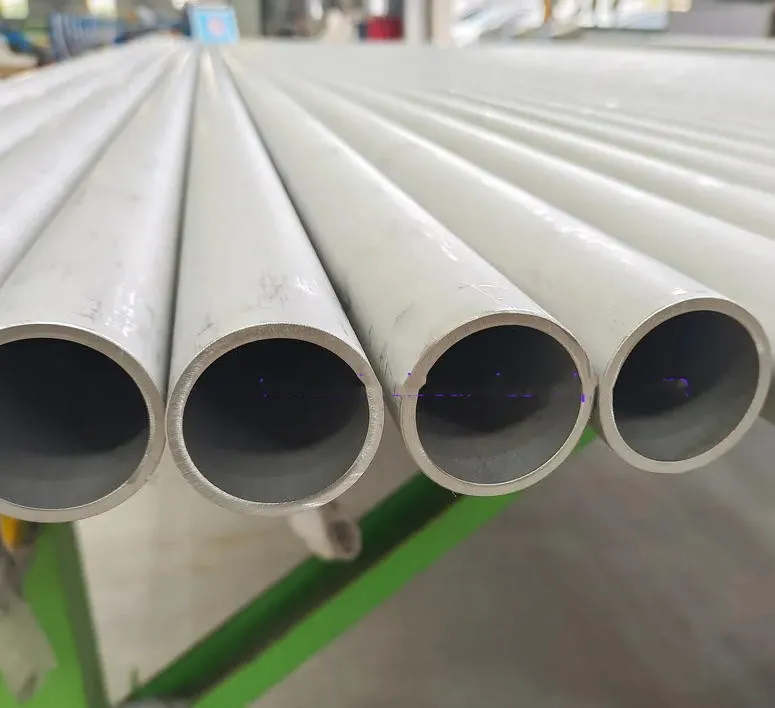
Regarding grain size control, we maintain a consistent grain size within the ASTM 5–8 range. The inner and outer surfaces of our 253MA stainless steel round pipes undergo precision finishing and cleaning treatments, ensuring they are free from scale, cracks, and inclusion defects. The inner surface roughness (Ra) is typically controlled to ≤0.8 μm. Consequently, the service life under cyclic high-temperature conditions is extended by over 30%, while maintenance frequency is reduced by approximately 25%, thereby significantly enhancing both the operational reliability and economic efficiency of the equipment.
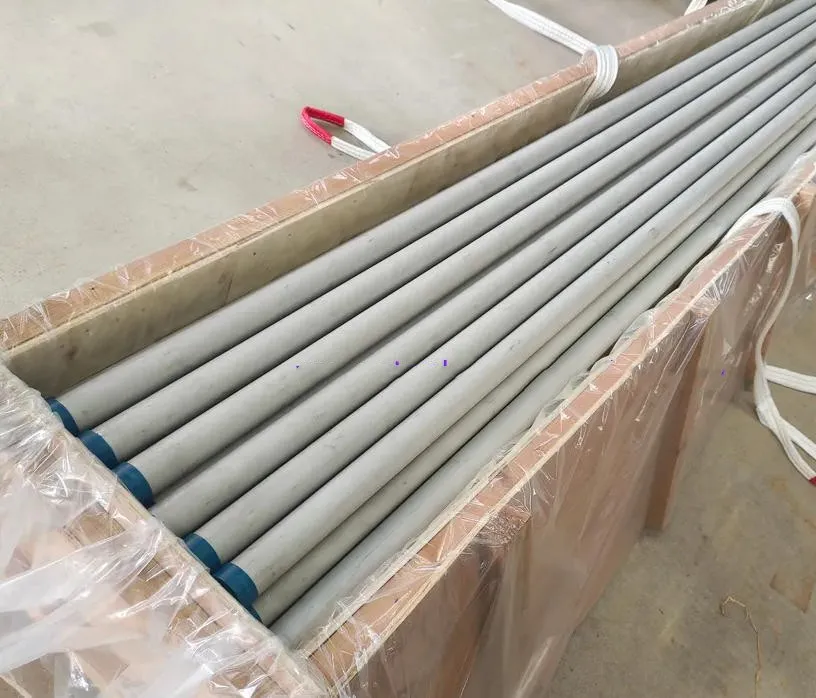
Specifications:
| Specifications | ASTM A312, ASME SA312 |
| Grade | UNS S30815 / 253MA |
| Size | 1/8" To 48" |
| Thickness | SCH 10 To SCH XXS |
| Type | Seamless / ERW / Welded / Fabricated / LSAW Tubes |
| Form | Round, Square, Rectangular, Hydraulic, Etc. |
| Length | 6M Or As Customed, Single Random, Double Random & Cut Length. |
| End | Plain End, Beveled End, Treaded |
Chemical properties of 253MA Stainless Steel Seamless Tubes and Pipes
| Grade | Ni | C | Cr | Mn | Si | P | Ce | S | N | |
| 253 MA | Min. | 10.0 | 0.05 | 20.0 | - | 1.10 | - | 0.03 | - | 0.14 |
| Max. | 12.0 | 0.10 | 22.0 | 0.80 | 2.00 | 0.040 | 0.08 | 0.030 | 0.20 |
Physical Properties of 253MA Stainless Steel Seamless Tubes and Pipes
| Density (kg/m3) | Elastic Modulus (GPa) | Mean Coefficient of Thermal Expansion (mm/m/°C) | Thermal Conductivity (W/m.K) | Specific Heat | Electrical Resistivity (nW.m) | |||
| 0-100°C | 0-600°C | 0-1000°C | at 20°C | at 1000°C | 0-100°C (J/kg.K) | |||
| 7800 | 200 | 17 | 18.5 | 19.5 | 15 | 29 | 500 | 850 |
Mechanical Properties of 253MA Stainless Steel Seamless Tubes and Pipes
| Tensile Str (MPa) min | Yield Str 0.2% Proof (MPa) min | Elongation (% in 50mm) min | Hardness | |
| Rockwell B (HR B) max | Brinell (HB) max | |||
| 600 | 310 | 40 | 95 | 217 |
ASTM A312 Outside Diameter Tolerance
| Standard | Outside Diameter Tolerance(mm) | Thickness Tolerance | Length Tolerance (mm) | |||
| ASTM A312 | [10.29~48.26] | +0.4/-0.8 | 10.3~73 | +20% / -12.5% | +6/-0 | |
| 88.9~457 T/D≤5% | +22.5%/-12.5% | |||||
| (48.26~114.30] | ±0.80 | 88.9~457 T/D>5% | +15%/-12.5% | |||
| (114.30~219.08] | +1.6/-0.8 | 508above T/D<5% | +22.5%/-12.5% | |||
| (219.08~457.20] | +2.4/-0.8 | 508above T/D>5% | +15%/-12.5% | |||
What precautions should be taken when welding 253MA seamless pipe? Can 310S welding consumables be used?
Welding Consumable Selection: Dedicated ER253MA welding wire or matching welding rods must be used.
Shielding Gas: Pure argon or argon gas with a trace amount of nitrogen is recommended to prevent nitrogen loss at the weld.
Heat Input: 253MA has poor thermal conductivity and a high coefficient of thermal expansion. Interpass temperature should be strictly controlled during welding, and a low current and fast welding speed should be used to prevent hot cracking.
What is the maximum operating temperature for 253MA?
It is generally recommended to use it above 850°C. Below 600-850°C, its advantages are not as obvious as those of 316L or 321, and there is a risk of σ phase precipitation.
GNEE welcomes customers to conduct direct inspections or to commission their designated third-party inspection agencies-such as SGS, BV, TUV, DNV, and other industry-recognized organizations-to perform inspections. We can provide Manufacturer Test Certificates (TC), raw material certificates, HT/DNT test reports, and third-party inspection reports in accordance with the EN 10204/3.1 standard.
Testing and Inspection:
Chemical Composition Analysis: Verified using spectroscopic techniques to confirm that the alloy meets specified compositions.
Mechanical Testing: Tensile, hardness, and impact testing to verify material performance at different temperatures.
Hydrostatic Testing: Pipes are tested for pressure durability to ensure leak-free performance.
Non-Destructive Testing (NDT): Includes ultrasonic, eddy current, and dye penetrant testing to detect any internal or surface defects.
Visual & Dimensional Inspection: Each pipe is visually inspected for surface finish, and dimensional accuracy is checked against specifications.