

Chemical storage tanks operate in harsh environments, requiring them to withstand corrosive media, temperature fluctuations, and prolonged exposure to chemicals. Selecting the right material is crucial for ensuring safety, durability, compliance, and controlling life-cycle costs. Among the many material options, 304 stainless steel is widely used in chemical storage tanks due to its excellent corrosion resistance, mechanical strength, and cost-effectiveness.
This article will explain why 304 stainless steel is a reliable choice, which chemicals it is suitable for, and how to select the appropriate specifications for your project.
What are 304 stainless steel plates used for chemical storage tanks?
304 stainless steel plates are widely used for chemical storage tanks because of their excellent corrosion resistance to many chemicals (acids, alkalis, salts), good strength, durability, ease of cleaning, and relatively lower cost, making them ideal for storing water, mild chemicals, food-grade substances, and for general processing equipment in chemical, pharmaceutical, and food industries where hygiene and moderate corrosion resistance are key.
Key Advantages of 304 Stainless Steel Plates for Chemical Storage Tanks
Corrosion Resistance in Mildly Corrosive Media
304 stainless steel (18% chromium, 8% nickel) exhibits excellent resistance to intergranular corrosion in the annealed condition (according to ASTM A262 Method E) and does not experience pitting corrosion in 1M NaCl solution at room temperature (tested according to ASTM G48 Method A).
When storing chemicals such as dilute acids, dilute alkalis, and neutral solutions, 304 stainless steel provides reliable long-term protection, and field data shows that in properly designed tanks, its service life can exceed 15-20 years.
Formability and Weldability in Tank Manufacturing
304 stainless steel plates have an elongation of ≥40% and a yield strength of 205-210 MPa (meeting ASTM A240 standards), allowing them to be easily formed into cylindrical, conical, or dished heads without cracking.
It can be welded using TIG, MIG, and SMAW welding methods with matching 308/308L welding wire, usually without the need for post-weld heat treatment.
Hygienic Surfaces and Easy Cleanability
Smooth, non-porous surfaces (achieving Ra ≤ 0.8 μm) prevent chemical residue buildup and microbial growth, meeting FDA and 3-A sanitary standards and suitable for the storage of food-grade and pharmaceutical-grade chemicals.
Clean-in-place (CIP) systems achieve over 99% reduction in surface contaminants after standard alkaline/acid cycles, ensuring product purity.
Mechanical Strength
With a tensile strength of up to 515 MPa at room temperature, thinner tank walls (e.g., 6-10 mm for atmospheric tanks) can be used compared to carbon steel (typically 12-16 mm), resulting in a 30-40% weight reduction and lower foundation loads


How to Choose the Right 304 Stainless Steel Plate for Your Tank
To maximize performance and service life, consider the following factors:
Plate Thickness
Determined by tank size, internal pressure, and design standard
Common thickness range: 3mm – 30mm
Surface Finish
2B: Standard industrial use
No.1: High-temperature or heavy-duty tanks
Polished: Hygienic or aesthetic requirements
Compliance Standards
Ensure the plates meet:
ASTM A240 / ASME
EN 10088
JIS G4304
depending on your local regulations and project specifications.
If your chemical storage application involves mildly to moderately corrosive environments, low chloride content, and cost control requirements, then 304 stainless steel plate is a proven and reliable choice.
GNEE supplies high-quality 304 stainless steel plates specifically designed for chemical storage tanks, with an annual export volume exceeding 3000 tons, sold worldwide.
Our 304 stainless steel plates strictly conform to ASTM A240/ASME SA240 standards. Each batch undergoes rigorous quality inspection, including chemical composition analysis, mechanical property testing (tensile strength, yield strength, elongation), and surface defect inspection, ensuring stable performance in corrosive environments. Typical thickness ranges from 3mm to 30mm, with surface finishes including No.1, 2B, BA, and mirror polishing. All products have strict dimensional tolerances (±0.05mm).
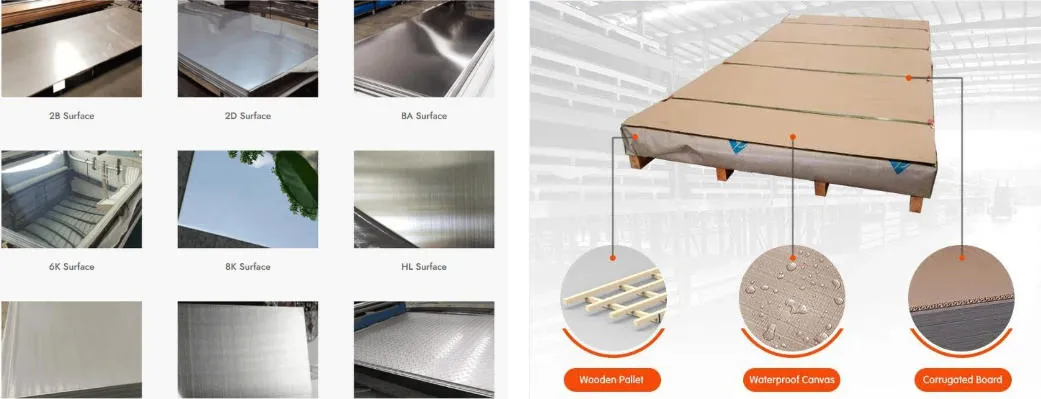
GNEE provides factory test certificates (3.1/EN10204) with all products, offering complete traceability and optional laser cutting/precision machining services to ensure compliance with international standards and your project requirements.
